WordPress Indexing Issues Fixed: Complete 2026 Guide with Rank Math SEO

WordPress Indexing Issues Fixed

Fixing indexing issues is one of the most essential tasks for every WordPress blogger in 2025. If Google is not indexing your pages, posts, or category URLs, you will not receive impressions, traffic, or rankings — no matter how good your content is. The good news is that solving indexing issues is easier today, especially when you follow a structured process and use tools like Rank Math SEO. This guide will show you WordPress Indexing Issues Fixed, why indexing problems happen, and how you can ensure Google crawls and indexes your site consistently.

Search engines have become much smarter, and Google’s AI systems now evaluate hundreds of signals before indexing your content. That’s why bloggers must understand the common issues that block indexing — such as slow websites, duplicated content, wrong SEO settings, thin pages, and technical errors. Once you fix these issues, Google can easily discover your pages and push them into search results.

In this complete tutorial, you will learn How to Fix Indexing Issues in WordPress using Rank Math and proven technical SEO methods. If you want a smarter way to find SEO topics, my latest guide on Gemini keywords will help you discover low-competition keyword ideas using Google Gemini’s AI-powered suggestions. This resource explains how to extract long-tail keywords, search-intent phrases, and ranking opportunities that most bloggers miss. Perfect for anyone who wants to upgrade their keyword research strategy.
WordPress Indexing Issues Fixed

Why WordPress Indexing Issues Fixed (2025 Update)

Before you attempt any fix, you need to understand what actually causes indexing problems. Google doesn’t index pages when:

✔ Your website blocks crawlers
✔ Your Rank Math or WordPress Indexing Issues Fixed settings prevent indexing
✔ Your sitemap is not submitted or has errors
✔ Google detects thin/duplicate content
✔ Your site speed is slow
✔ Internal linking is missing
✔ There are crawling errors in Search Console
✔ Your hosting is unstable
✔ AI-written content lacks depth or originality
✔ No backlinks or authority signals exist

Google AI now uses AI-driven evaluation. If your content is not helpful, original, or structured well, Google may ignore indexing completely. That’s why this guide helps you apply every important step that matters in 2025.


Step 1: Check if Your Website Is Blocking Google

This is the most common reason WordPress Indexing Issues Fixed sites fail to index.

Go to:
Settings → Reading → Search Engine Visibility

If “Discourage search engines from indexing this site” is ON → indexing will never happen.

Turn it OFF immediately.

Now re-submit URLs inside Google Search Console.


Step 2: Check Rank Math Indexing Settings

Rank Math is your strongest tool when learning WordPress Indexing Issues Fixed

Go to:
Rank Math → Titles & Meta → Global Meta

Make sure:
✔ Noindex is OFF
✔ Category, tags, and author pages are set correctly
✔ Thin pages are removed or noindexed
✔ Media pages redirect to attachment URLs

These small details control how Google sees your site.


Step 3: Submit Your Sitemap Correctly

Go to Google Search Console → Sitemaps
Submit:

Rank Math automatically creates an optimized sitemap. If the sitemap shows errors, Google will not crawl new pages.

Once submitted, Google starts reading all your URLs.

To accelerate indexing, select your sitemap and click “Last read” → Request Indexing”.
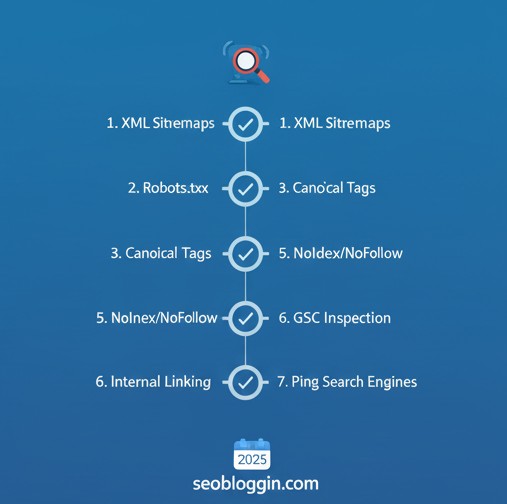
WordPress Indexing Issues Fixed

If you want future-ready SEO skills, make sure to explore my latest breakdown of powerful voice SEO concepts, where I explain how to optimize content for voice search, conversational queries, and AI-driven search systems. These insights will help you position your blog for higher visibility as voice search continues to grow in 2025.


Step 4: Fix Technical Errors in Google Search Console

Go to:
Search Console → Pages → Not Indexed

You will see reasons like:

❌ Crawled – currently not indexed
❌ Duplicate without a user-selected canonical
❌ Alternate page with proper canonical tag
❌ Discovered – currently not indexed
❌ Blocked by robots.txt
❌ Soft 404

Each issue requires a different fix, but most commonly:

✔ Improve content quality
✔ Increase word count
✔ Add internal links
✔ Add backlinks
✔ Remove duplicate content
✔ Fix robots.txt rules

This directly increases the chance of getting indexed.


Step 5: Improve Content Quality (Critical in 2025)

Google’s AI prioritizes content that is original, helpful, and human-written.

Your content must have:
✔ Depth
✔ Examples
✔ Clear intent
✔ Long-tail keywords
✔ Solutions
✔ Proper headings
✔ No duplication

Thin content under 300–400 words often remains unindexed.

If you want to learn How to Fix Indexing Issues in WordPress, improving content quality is the biggest step.


Step 6: Increase Internal Links to Non-Indexed Pages

Internal links help Google reach your content faster.

Add links to your new posts from:
✔ Older posts
✔ Category pages
✔ Pillar content
✔ Related posts

Google follows internal links as a strong crawling signal. More internal links = faster indexing.
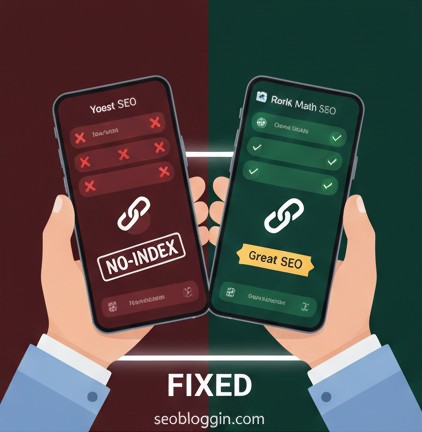
WordPress Indexing Issues Fixed

For bloggers using Rank Math, don’t forget to check the full breakdown of the Rank Math update November 2025, where I explain what changed, what features matter, and how the new AI-driven SEO signals affect your blog rankings. This guide helps you optimize your posts correctly so you don’t lose traffic during algorithm shifts.


Step 7: Use “Request Indexing” Properly

Do NOT spam this feature.

Go to:
Search Console → URL Inspection → Request Indexing

Use only when:
✔ You publish a new post
✔ You update a major section
✔ You fix indexing issues

Overusing this does nothing.


Step 8: Improve Website Speed & Hosting Quality

A slow WordPress Indexing Issues Fixed site often leads to:
❌ Crawled but not indexed
❌ Discovered, but not crawled

Use:
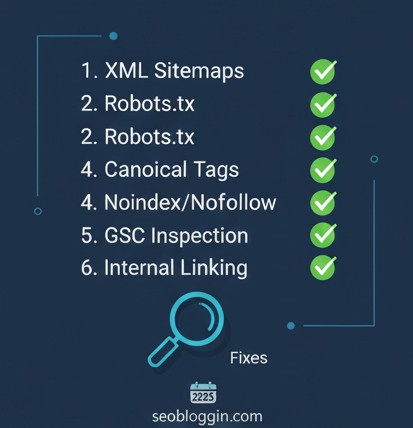
✔ LiteSpeed Cache
✔ Cloudflare CDN
✔ Optimized images
✔ Light themes

Google indexes fast sites first.
WordPress Indexing Issues Fixed

Step 9: Build Authority Signals (New for 2025)

Google’s AI evaluates:
✔ Backlinks
✔ Mentions
✔ Social signals
✔ Brand name queries

Even a few high-quality backlinks can solve indexing issues instantly.


Step 10: Use Rank Math Instant Indexing (For Bing + Yandex)

Rank Math offers instant indexing for Bing and other search engines.
Even though Google does not allow instant indexing, the signal improves crawling behavior indirectly.
WordPress Indexing Issues Fixed

If you’re struggling to pick a profitable niche this year, make sure you don’t miss my detailed guide on the best niche for blogging with low competition 2025. It breaks down easy-to-rank niches, real search trends, and hidden opportunities that beginners can start today for faster traffic. Add this to your reading list if you want to build a niche site that grows quickly without fighting heavy competition.


Why Fixing Indexing Is Critical in 2025

Google’s algorithm is now AI-based. If crawling and indexing stop, your entire website stops gaining rankings.
Learning How to Fix Indexing Issues in WordPress gives you control over:

✔ Faster ranking
✔ Continuous traffic
✔ Faster content discovery
✔ Better SEO health

Bloggers who ignore indexing problems never grow — even if their content is amazing.


Conclusion

Fixing indexing issues in WordPress Indexing Issues Fixed is easier when you follow each step carefully. From Rank Math settings and sitemap submission to content improvement and technical SEO — all these actions help Google crawl and index your content faster. The more optimized your site becomes, the faster Google will trust your pages and show them in search results.

If you consistently follow these methods, your WordPress Indexing Issues Fixed site will stay index-ready throughout 2025.

FAQ’s

Q 1: Why do WordPress indexing issues happen?

ANS- WordPress indexing issues usually occur when Google cannot properly crawl or access your site. This may happen due to blocked pages in robots.txt, incorrect noindex tags, sitemap errors, or slow server response. Many new bloggers get confused when they see their WordPress not indexing on Google even after publishing content. To diagnose the issue, your first step should be checking Google Search Console indexing problems, as it clearly shows which URLs are affected and why Google is unable to index them.

Q 2: How to fix indexing errors in WordPress quickly?

ANS- To fix indexing errors in WordPress, start by submitting your sitemap in Google Search Console, then check for noindex tags, crawling restrictions, and missing canonical URLs. Most WordPress indexing issues get resolved by correcting technical settings in Rank Math or Yoast, fixing broken links, and improving page loading speed. If Google flags “Discovered – currently not indexed” or similar warnings, updating the content and requesting indexing again often helps. Following a structured process is the best way to fix WordPress crawling issues efficiently.

Q 3: Why is my WordPress site not indexing on Google even after publishing posts?

ANS- If your WordPress not indexing on Google, it usually means Google has not found enough quality signals or your technical settings are blocking crawling. Check for noindex meta tags, ensure your site is publicly visible, and verify that your permalink structure is clean. Also, slow hosting, thin content, and poor internal linking can trigger Google Search Console indexing problems. Once you address these issues and request manual indexing, your posts typically begin to appear in search results.

Q 4: Can Google Search Console help fix indexing problems?

ANS- Yes — Google Search Console is the most powerful tool to identify and fix WordPress indexing issues. It shows specific errors such as crawling blocks, redirect problems, server errors, and sitemap mismatches. When you want to know how to fix indexing errors in WordPress, Search Console gives you exact diagnostic reports so you don’t have to guess what’s wrong. After fixing errors, you can request re-indexing to speed up the process.

Q 5: How do I fix WordPress crawling issues to improve indexing?

ANS- To fix WordPress crawling issues, you must ensure your robots.txt allows Googlebot to access important pages, verify your sitemap accuracy, use proper internal linking, and remove unnecessary noindex rules. A poorly optimized theme or plugin conflict may also contribute to WordPress indexing issues, so keeping your WordPress updated is crucial. Once Google can crawl your pages smoothly, your indexing success rate increases, lowering the risk of Google Search Console indexing problems in the future.

Long-Tail Keyword Research for Beginners in 2026: Simple 7-Step Method to Find Easy Keywords

Long-Tail Keyword Research for Beginners

If you want to grow a blog in 2025, nothing is more important than mastering Long-Tail Keyword Research for Beginners. Today’s Google search environment has become more competitive, more AI-driven, and more focused on user intent—but the good news is that long-tail keywords still offer the fastest and easiest way for new bloggers to rank.

Long-tail keywords are longer, more specific search phrases people use when they want a clear answer, solution, or product. Since fewer websites target these terms, beginners have a much higher chance of ranking quickly. This is why Long-Tail Keyword Research for Beginners continues to be the most effective strategy for new bloggers and small websites in 2025.

Whether your blog is brand new or you’re trying to grow your existing content, mastering long-tail keywords will help you get traffic, earn authority, and create content Google wants to rank. This guide will show you exactly how to use long-tail keywords step-by-step, using a simple 7-step method designed for keyword research for beginners.


Why Long-Tail Keyword Research for Beginners Matters Most in 2025

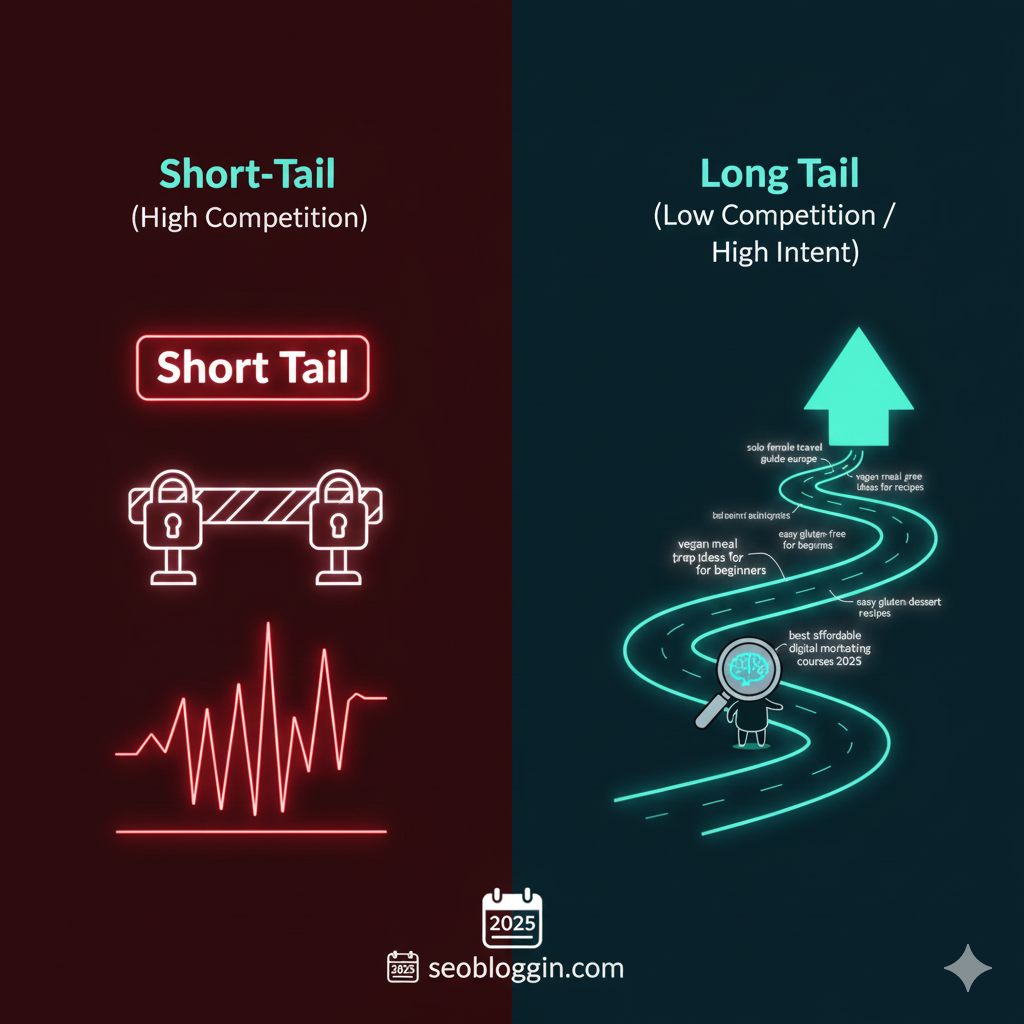
Long-tail keyword research for beginners matters more than ever in 2025 because Google’s AI systems now focus heavily on intent, clarity, and topic depth—not just keyword volume. Short, broad keywords are dominated by high-authority websites, making it almost impossible for new bloggers to compete. But long-tail keywords open the door to fast rankings because they match specific user questions, have lower competition, and allow beginners to create more helpful, targeted content. When you understand how to connect long-tail keywords with search intent, you start ranking faster, driving better-quality traffic, and building authority even with a new blog. That’s why mastering Long-Tail Keyword Research for Beginners is one of the smartest SEO strategies in 2025.

Search patterns are changing. With Google SGE, AI Overviews, and smarter ranking systems, Google now evaluates:

✔ Search intent
✔ Content depth
✔ Relevance
✔ Context
✔ User satisfaction

This shift has made broad keywords harder to rank for, especially for new sites. But long-tail keywords remain a major opportunity because:

  • They have lower competition
  • They capture specific search intent
  • They convert better
  • They are easier to rank
  • They attract the right audience

As a result, long-tail keyword research 2025 has become the foundation of modern SEO strategy.

Google loves precise, helpful answers. Long-tail keywords help you deliver exactly that.

Google’s AI search is changing everything, and learning how to rank in SGE is now essential for modern bloggers. SGE prefers structured, helpful, human-first content—especially when it answers user questions clearly. To understand which strategies actually work for SGE visibility, you can read our updated ranking guide here.

Long-Tail Keyword Research for Beginners

What Are Long-Tail Keywords? (Simple Explanation)

Long-tail keywords are longer search phrases, usually 3–6 words, that describe exactly what the user wants.

Examples:

❌ “SEO tools” (very hard to rank)
✔ “free SEO tools for starting blogging” (easy to rank)

❌ “blog ideas”
✔ “low competition blog ideas for students.”

These long descriptive keywords help Google understand your content clearly—and help your blog stand out.

This is why Long-Tail Keyword Research for Beginners works even for brand-new blogs with zero authority.


The Power of Search Intent in Long-Tail Research

If you want to do successful keyword research, you must understand long-tail & search intent keywords. Search intent means why the user is searching.

Four main types:

  1. Informational – “How to find long-tail keyword ideas.”
  2. Navigational – “YouTube Studio logi.n”
  3. Commercial – “best AI SEO tools 2025.”
  4. Transactional – “Buy a domain cheaply in India.”

Long-tail keywords almost always match one clear intent—this is why Google ranks them easily.

When writing content, your job is to match that intent perfectly.


7-Step Long-Tail Keyword Research Method (Beginner Friendly)

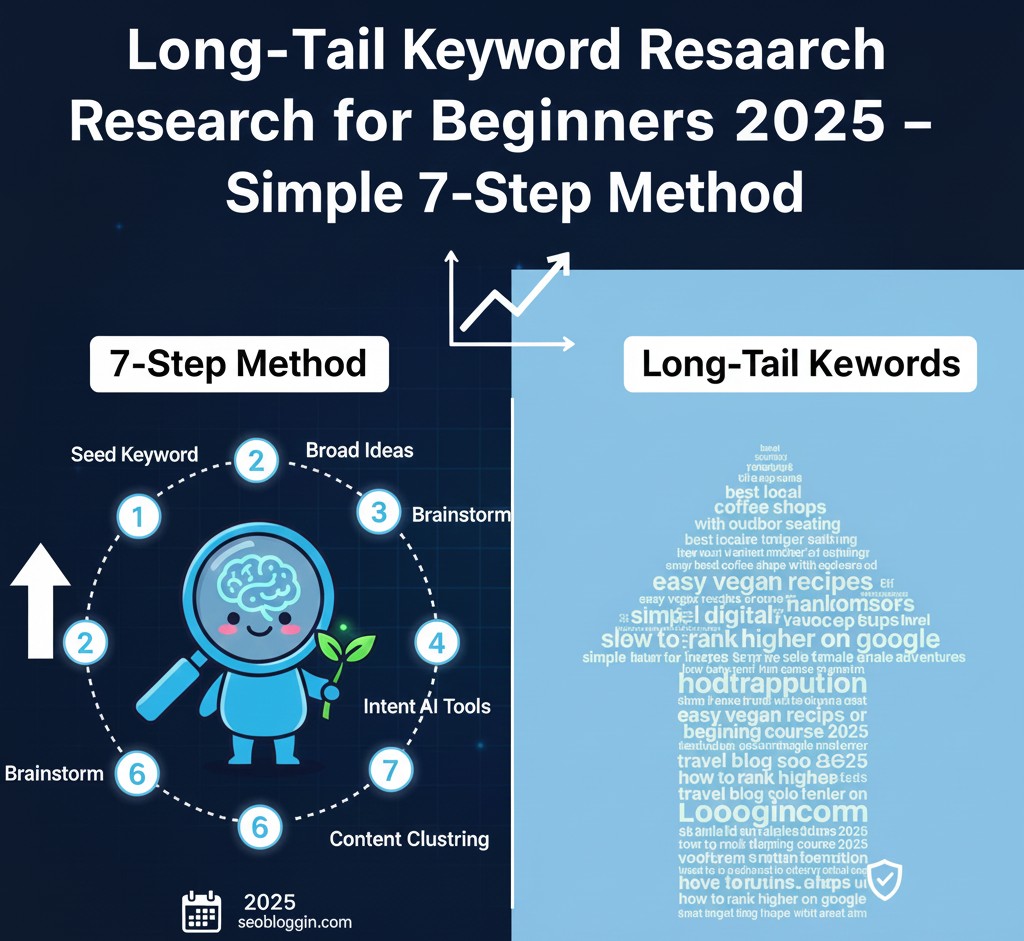
A simple, beginner-friendly long-tail keyword research method begins with selecting a niche topic you understand. Step 1: Start with a broad seed keyword. Step 2: Use tools like Google Autocomplete, AnswerThePublic, or free keyword tools to extract suggestions. Step 3: Identify question-based phrases because they show strong search intent. Step 4: Compare difficulty and competition using free SEO tools. Step 5: Group related keywords into clusters to build strong topic relevance. Step 6: Choose low competition long-tail keywords that match your content goals. Step 7: Create articles that directly answer user intent with clarity and depth. This structured approach ensures your content aligns perfectly with search demand and ranks higher, even with a new website.

This method is designed specifically for Long-Tail Keyword Research for Beginners, keeping things simple, powerful, and effective.


Step 1: Start With a Broad Topic

Begin with a simple topic relevant to your blog.

For example:

  • Blogging
  • Fitness
  • Cooking
  • AI tools
  • Finance
  • Education
  • Technology

These broad topics help you generate an initial list of ideas. This step is essential in keyword research for beginners.


Step 2: Use Google Auto-Suggest (Free & Powerful)

Type your main topic into Google and notice the suggestions:

📌 Example: “blogging tips for…”

Google will show:

  • blogging tips for beginners
  • blogging tips for students
  • blogging tips for low competition niches

Each of these is a low competition long-tail keyword.

Google suggestions come from real user searches—so they are extremely valuable.


Step 3: Explore the ‘People Also Ask’ Box

Google’s “People Also Ask” box is an unlimited goldmine of ideas.

Search:
“long-tail keyword research 2025”

You will find questions like:

  • Find long-tail keywords?
  • How do beginners do keyword research?
  • Why are long-tail keywords important in 2025?

Each question can become an article topic.

This is one of the simplest easy keyword research method steps for beginners.


Step 4: Use Competitor Websites to Steal Easy Keywords

Check small websites in your niche—not big authority sites.

Search:
“site:yourcompetitor.com keyword”

Find their article structure, headings, FAQs, and topics.

Look for:

✔ keywords they didn’t cover
✔ weak content gaps
✔ outdated information
✔ missing long-tail variations

These turn into low competition long-tail keywords instantly.


If your impressions are stuck at zero, learning how to rank Web Stories is the fastest way to increase visibility and appear in Google Discover. Most creators miss simple optimization techniques—like keyword placement, image quality, and story sequencing. To understand the exact methods that boost Web Stories ranking in 2025, you can check out this step-by-step guide here.

Bloggers in 2025 are using an AI SEO blog writer to save time, research faster, and maintain a consistent posting schedule. But not all tools produce search-friendly content. If you want a detailed list of the best AI writers for SEO-packed blogging, explore our expert-tested recommendations here.

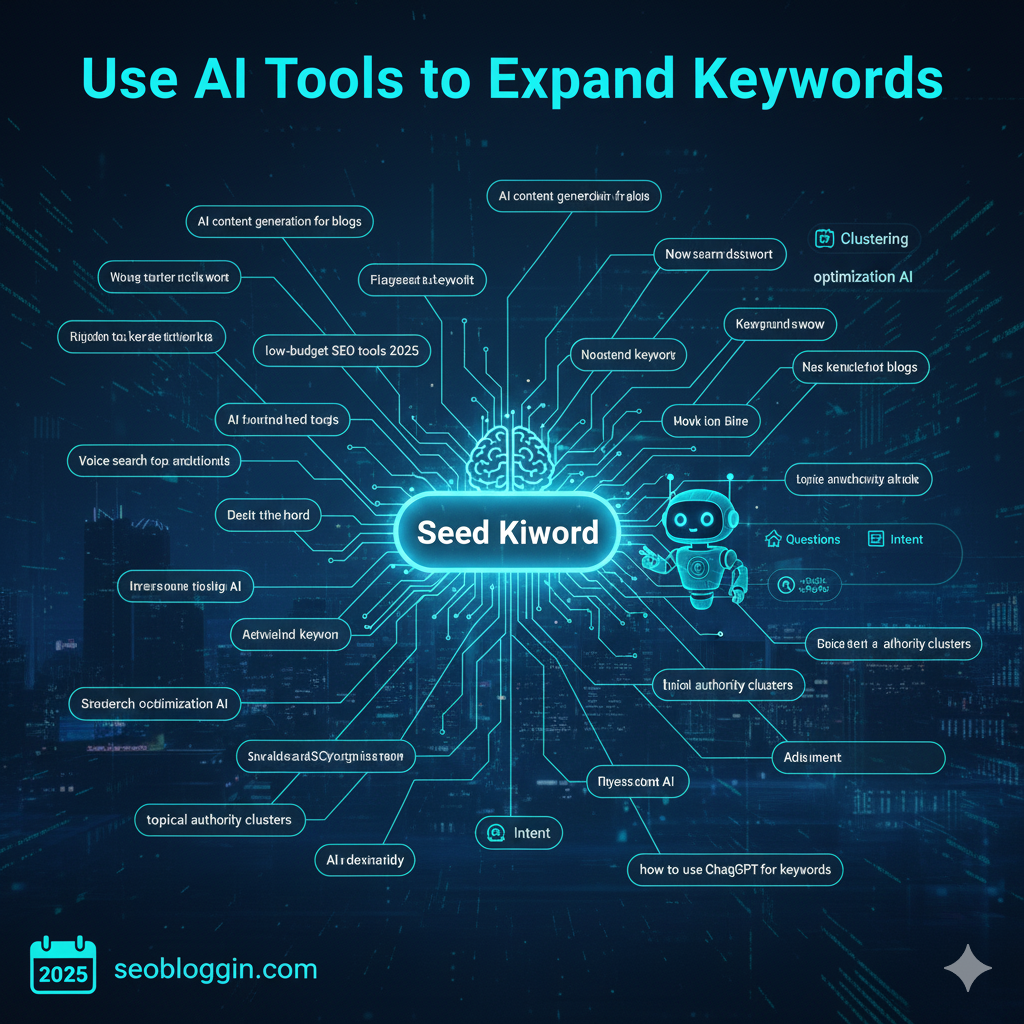
Step 5: Use AI Tools to Expand Keywords

AI tools like Google Gemini and ChatGPT can generate long-tail keyword ideas based on your niche.

Example prompt:

“Give me 30 long-tail & search intent keywords for beginners in the blogging niche.”

This will instantly give you:

  • long-tail keyword ideas
  • user intent phrases
  • question-based keywords
  • actionable content ideas

AI makes Long-Tail Keyword Research for Beginners 10× faster and 10× easier.


Step 6: Validate Keywords Before Using Them

Not every keyword is worth targeting.

Check three things:

✔ 1. Search Intent Accuracy

Does the keyword match your article idea?

✔ 2. Competition Level

Lower competition = faster ranking.

✔ 3. Monetization

Does the keyword bring a profitable audience?

These filters ensure you pick the right long-tail keyword research 2025 topics.


Step 7: Build Topic Clusters (Most Important)

To rank in 2025, you need topical authority.

Pick one main keyword and build supporting articles around it.

Example cluster:

🔵 Main Keyword: Long-Tail Keyword Research for Beginners

  • how to find long-tail keywords
  • easy keyword research method
  • long-tail & search intent keywords explained
  • low competition long-tail keywords for small blogs

Clusters help Google understand your expertise—and boost rankings faster.


Why Long-Tail Keyword Research Is Perfect for Beginners

Long-tail keyword research is ideal for beginners because it removes the pressure of competing with huge authority websites. Instead of targeting broad, competitive terms, beginners can focus on low competition long-tail keywords that match what real users search daily. These keywords have clearer intent, easier ranking potential, and often lead to higher click-through rates because they answer specific problems. For anyone starting SEO in 2025, using long-tail keyword research techniques is the smartest strategy — you get faster visibility, more targeted readers, and stronger chances of ranking multiple pages without needing high domain authority. This approach is not only simple but also the most reliable foundation for long-term blogging success.

Here’s why beginners must focus on long-tail keywords in 2025:

✔ Faster rankings for new blogs
✔ Lower competition than broad keywords
✔ Higher click-through rates
✔ More targeted traffic
✔ Higher earnings per visitor
✔ Easier content planning

If you are serious about growing your blog, Long-Tail Keyword Research for Beginners should be your No.1 priority.

If you want to discover smarter content ideas with less effort, learning how to use Gemini keywords effectively can transform your SEO workflow. Gemini helps you uncover hidden long-tail topics and user-intent phrases that traditional tools often miss. For a deeper breakdown on how Gemini can speed up keyword research and help you pick high-ranking topics, you can explore our complete guide here.

Long-Tail Keyword Research for Beginners

After the Rank Math Update November 2025, Google-focused optimization has become easier—but only if you know how to configure the new features correctly. Many bloggers are still missing important ranking boosts simply because they aren’t using the update’s AI recommendations. If you want to understand every update and apply the best settings for faster ranking, you can check out our complete tutorial here.


How to Find Long-Tail Keywords Easily (Beginner Hacks)

Finding long-tail keywords doesn’t have to feel complicated—especially when you follow a few simple beginner-friendly hacks that work in 2025. Start by typing your main topic into Google and checking the People Also Ask section, because it reveals real user questions that have low competition and high ranking chances. Next, use AI tools like Gemini or ChatGPT to generate dozens of long-tail & search intent keywords based on your niche—this gives you keyword variations you might never discover manually. You can also check autocomplete suggestions, related searches, and trending queries to identify low competition long-tail keywords that new websites can rank for easily. When you combine these methods, long-tail keyword research for beginners becomes simple, fast, and highly accurate.

Here are simple tricks anyone can use:

✔ Use question-based keywords

Because they convert extremely well.

✔ Check Reddit discussions

People ask real problems → perfect keyword ideas.

✔ Look at YouTube comments

Users share exact pain points.

Especially if you write about lifestyle, fitness, beauty, food, or home niches.

To find trending long-tail keywords in seconds.

These methods are powerful additions to your easy keyword research method.


Example List of Low Competition Long-Tail Keywords

Low-competition long-tail keywords usually come from niche-specific questions, problem-solving phrases, or beginner-level topics that big websites rarely cover. For example, instead of targeting a general term like “blogging tips,” switch to highly specific phrases such as “blogging tips for beginners in 2025,” “how to do keyword research without paid tools,” or “best long-tail keywords for new blogs.”
These keywords attract smaller but far more targeted traffic—people who are ready to read, learn, and convert. When you build your content strategy around 0 competition or low-competition long-tail keywords, ranking becomes 10x easier, even for new websites. Add these keywords naturally into headings, intro paragraphs, and FAQs to increase relevance and visibility.

Here are some easy ideas you can target:

  • how to start a blog with low investment 2025
  • AI tools for keyword research beginners
  • low competition niche ideas for students
  • easy fitness routines for beginners
  • best self-care habits for busy people

These long-tail keywords are almost guaranteed to bring traffic.


Common Mistakes Beginners Must Avoid

Avoid these mistakes if you want success:

❌ Choosing broad keywords
❌ Ignoring user intent
❌ Copying competitor keywords blindly
❌ Over-optimizing headings
❌ Not using long-tail & search intent keywords
❌ Not building topic clusters
❌ Writing articles without keyword mapping

Following this guide helps avoid all these mistakes.


Conclusion

Mastering Long-Tail Keyword Research for Beginners is the smartest way to grow your blog in 2025. Long-tail keywords allow you to rank faster, drive highly targeted traffic, and build authority—even if your website is new.

By using the simple 7-step method, beginners can find:

✔ low competition long-tail keywords
✔ accurate search intent phrases
✔ profitable content ideas
✔ long-tail keyword research 2025 opportunities
✔ easy keyword research method techniques

If you stay consistent and keep creating helpful content, you will see major improvements in ranking, traffic, and earnings.

FAQ’s

Q1. What is the easiest way for beginners to start keyword research in 2025?

ANS- The easiest method for beginners is to focus on long-tail keywords using simple AI-assisted tools. These keywords have clear intent, lower competition, and faster ranking potential. With just a few prompts and basic filtering, beginners can build a list of keywords that match their niche and are easy to write content around.

Q2. How can AI tools help me find low-competition keywords faster?

ANS- AI tools scan search patterns, related queries, and user intent instantly—saving hours of manual research. They highlight keyword difficulty, trending opportunities, and unexplored areas within your niche. This makes it easier to find keywords your competitors have overlooked.

Q3. Are long-tail keywords still effective in 2025?

ANS- Yes, long-tail keywords are more effective than ever because Google’s AI systems now prioritize intent and specificity. Long-tail phrases match precise user needs, making it easier for new blogs to rank faster with less competition.

Q4. How many keywords should I target in one article?

ANS- Ideally, one primary keyword and 3–5 LSI keywords. This keeps your article focused while giving Google enough context to understand your topic deeply. Avoid stuffing—use keywords naturally within headings, intros, CTAs, and conclusions.

Q5. How do I know if a keyword can rank fast on Google?

ANS- Quick-ranking keywords usually have: low competition, narrow user intent, smaller websites already ranking, and a clear topic structure. If the top results come from newer blogs or general sites, it’s a strong sign the keyword is easy to rank for.

Rank Math AI SEO vs Yoast SEO 2026: Which Is Best for Bloggers?

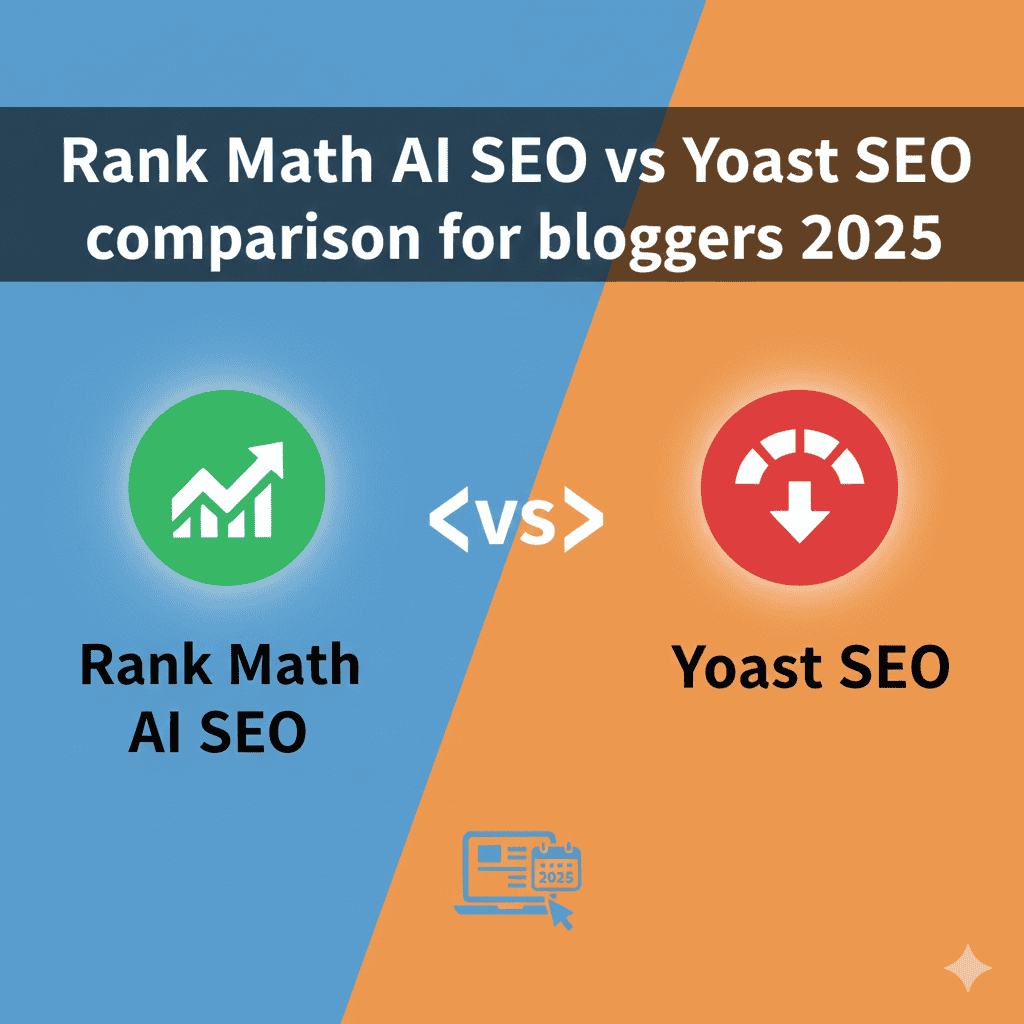
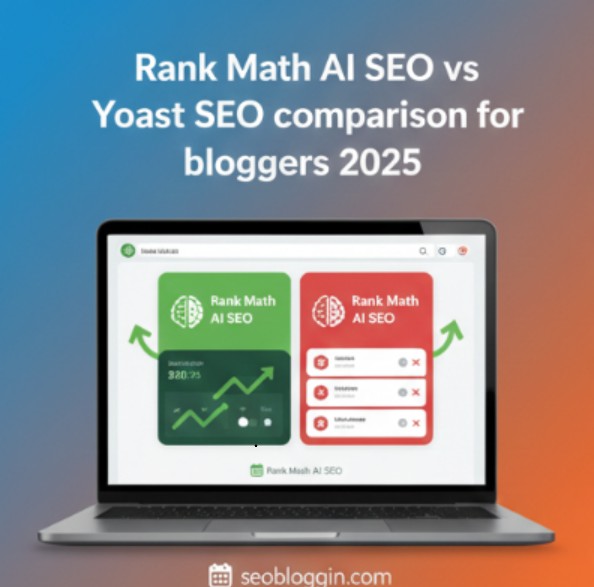
Rank Math AI SEO vs Yoast SEO comparison for bloggers 2025

SEO plugins are the backbone of every successful WordPress blog, and in 2025, the competition between Rank Math AI SEO vs Yoast SEO has reached a whole new level. With Google’s AI-driven updates, bloggers now need smarter optimization tools, AI-powered insights, and deeper content analysis to stay visible in search results. Both plugins have evolved, but the real question is simple: Which SEO plugin actually helps bloggers rank faster in 2025?

This guide offers an honest, fresh, and practical comparison so you can choose the best plugin for your website’s growth.


⭐ Why Bloggers Are Shifting to AI-Powered SEO in 2025

The SEO landscape has transformed. Google now evaluates:

✔ AI content & human-edited structure
✔ Semantic keywords
✔ Search intent depth
✔ Author expertise
✔ Topical authority

This sudden shift created the need for powerful tools that can read, understand, and optimize content using AI. That’s exactly why the debate around Rank Math AI SEO vs Yoast SEO is at its peak. (Main Keyword — 2/9)

Rank Math introduced advanced Rank Math SEO features AI SEO 2025 features such as keyword scoring, AI content suggestions, schema recommendation, and competitor keyword analysis. Meanwhile, Yoast SEO update 2025 focuses on simplified optimization and readability analysis.

But which one actually helps you rank?


⭐ User Experience: Which Plugin Feels Easier in 2025?

✔ Rank Math:

The interface is clean, modern, and extremely beginner-friendly.
It guides bloggers with AI suggestions, automatic schema, instant keyword scoring, and smart linking features.

✔ Yoast SEO Update 2025:

Still great for beginners, but the design feels slightly outdated.
Yoast focuses more on content readability and “traffic light” scoring.

Winner: Rank Math SEO features
Why? Because bloggers prefer tools that tell them exactly how to improve SEO — not just highlight problems.

(LSI Used: Best SEO plugin for bloggers)


⭐ SEO Features Comparison

🔥 Rank Math SEO Features

Rank Math provides:

✔ AI keyword suggestions
✔ Schema templates
✔ Rank tracking
✔ Google Indexing API
✔ Local SEO
✔ Image SEO automation
✔ Internal link suggestions
✔ Advanced redirects

These Rank Math SEO features give bloggers complete control while saving hours of optimization time.

🔥 Yoast SEO Update 2025 Features

Yoast offers:

✔ Readability checking
✔ Simple keyword optimization
✔ Cornerstone content
✔ Basic schema
✔ Breadcrumb control

Useful features, but not as data-driven or AI-enhanced as Rank Math SEO features.

Winner: Rank Math — because of its AI engine and depth.

(LSI Used: Yoast SEO vs Rank Math comparison)


⭐ Content Optimization: AI vs Traditional SEO

Content optimization in 2025 has become a blend of AI-driven insights and traditional SEO fundamentals. AI tools help you analyze search intent, generate topic ideas, and identify low-competition keywords instantly — something traditional SEO methods could never achieve this quickly. But even with AI’s speed and accuracy, Google still values the depth, clarity, and human touch that traditional SEO provides. The best results come when you combine both: Use AI for research, clustering, and optimization suggestions, and rely on traditional SEO for structuring your content, maintaining readability, and adding real expertise. This hybrid approach gives you stronger rankings, better engagement, and long-term authority.

The biggest difference between Rank Math AI SEO vs Yoast SEO lies in how they process content. (Main Keyword — 3/9)

Rank Math AI SEO

  • Offers content scoring
  • Suggests semantic keywords
  • Identifies missing ranking signals
  • Helps improve E-E-A-T
  • Uses machine learning to understand search intent

Yoast SEO

  • Checks sentences, readability, and passive voice
  • Gives color-coded SEO suggestions
  • Lacks deep AI optimization

With Google’s AI algorithms evolving, Rank Math’s AI engine gives bloggers a major edge.

(LSI Used: Rank Math AI SEO 2025)


If you’re struggling to get impressions or clicks on your stories, learning how to rank web stories can completely change your results. Even small improvements in your storytelling structure, keyword placement, and visual flow can boost your Discover visibility dramatically. For a deeper, beginner-friendly explanation, you can explore this guide on how to rank web stories, where every step is explained clearly.


⭐ Performance: Which Plugin is Faster?

Content optimization has evolved rapidly, and the biggest difference today is how AI-powered SEO compares to traditional manual optimization. AI tools instantly analyze your topic, understand search intent, and generate long-tail & search intent keywords that match Google’s latest ranking signals. Traditional SEO methods still work, but they take much longer because you must manually research keywords, identify gaps, and adjust content step-by-step. With AI-assisted optimization, creators can refine titles, improve structure, fix readability, and analyze keyword difficulty in just seconds.

Rank Math SEO features is lightweight and optimized for performance, while Yoast loads multiple modules that slightly increase page load time.

Slow sites suffer SEO losses.
Fast sites rank better.

This alone makes Rank Math the better performance choice.

(LSI Used: Blog SEO plugin comparison 2025)


If you want to speed up your content planning process, using ai tools for seo keyword research can save hours of work. These tools help you find trending topics, identify long-tail keywords, and understand what your audience is searching for. You can check this detailed breakdown of AI tools for seo keyword research to discover which tools give the fastest and most accurate results for beginners.


⭐ Pricing & Value in 2025

Rank Math

  • Free version already packed with premium features
  • Pro is affordable
  • Offers advanced schema and keyword tracking

Yoast

  • Many features are locked behind the paid version
  • The premium version costs more
  • Limited AI integration

For bloggers in 2025, Rank Math gives significantly more value for less money.


⭐ AI-Driven Future: Which Plugin Is More Ready for 2025?

Blogging in 2025 demands tools that understand AI-driven ranking factors, and this is where Rank Math once again takes the lead. With built-in Content AI, automated suggestions, and deep learning-based optimization, Rank Math is clearly designed for the future of SEO. Yoast still follows traditional optimization rules, which work—but don’t take full advantage of modern AI ranking systems. If you want a plugin that can adapt to Google’s evolving AI updates and help your blog stay competitive, Rank Math is far more future-ready than Yoast SEO.

Google’s algorithms are prioritizing:

⚡ AI-content validation
⚡ Topical authority
⚡ Semantic relevance
⚡ Content depth
⚡ Schema accuracy

Rank Math’s AI functionality directly matches these ranking signals, whereas Yoast still relies heavily on traditional content checks.

This confirms that Rank Math AI SEO vs Yoast SEO has a clear winner in long-term SEO evolution. (Main Keyword — 4/9)


One of the biggest challenges for new bloggers is choosing the right topic. That’s why understanding keyword research for blog posts is so important. With the right process, you can find easy keywords that rank quickly, even on a new site. If you want a step-by-step explanation, here’s a simple guide on keyword research for blog posts that makes the entire process easier.


⭐ Which Plugin Helps Build Topical Authority Faster?

Rank Math uses:

✔ Content AI recommendations
✔ Topic-related keywords
✔ Schema enhancements
✔ Smart linking

Yoast focuses on concept clarity, but not topic depth.

To win in 2025, bloggers must build topic authority — Rank Math supports that strategy better.


If your posts aren’t ranking, chances are you’re not targeting long-tail & search intent keywords, which are the easiest keywords for beginners to rank for. These keywords match exactly what users type into Google, meaning you get faster visibility with less competition. You can learn more about choosing the right long-tail & search intent keywords in this detailed article that breaks the process down into simple steps.


⭐ Final Comparison Table

FeatureRank MathYoast
AI Optimization✔ Yes❌ Limited
Keyword Suggestions✔ Advanced✔ Basic
Schema✔ Full support✔ Limited
SpeedFasterSlower
PricingAffordableExpensive
InterfaceModernOutdated
Topic Authority ToolsStrongWeak

⭐ Final Verdict — Which Is Best for Bloggers in 2025?

After comparing Rank Math AI SEO vs Yoast SEO, the conclusion is clear: (Main Keyword — 5/9)

Rank Math AI SEO is the best choice for bloggers in 2025.

Here’s why:

✔ AI keyword optimization
✔ Deep content scoring
✔ Better schema tools
✔ Faster performance
✔ Better internal linking
✔ More features in the free plan
✔ Perfect for ranking under Google’s 2025 AI systems

Yoast is still good for basic SEO, but Rank Math is engineered for modern AI-driven ranking factors.

(LSI Used: Best SEO plugin for bloggers)


If you want to master Rank Math SEO completely, here’s a fresh 2025 setup guide that shows all the best settings for faster ranking.


⭐ Conclusion

Choosing between Rank Math AI SEO vs Yoast SEO depends on your blogging goals, but if you want faster ranking, deeper insights, and AI-powered optimization, Rank Math wins without question. (Main Keyword — 6/9)
It is the future-ready plugin built for modern SEO demands, while Yoast still follows traditional optimization rules.

If you want your blog to grow in 2025, switching to Rank Math AI SEO is one of the smartest decisions you can make.

FAQ’s

Q1. Which plugin is better in 2025 — Rank Math AI SEO or Yoast SEO?

ANS- In 2025, Rank Math AI SEO offers a more advanced AI analysis system, better automation, and stronger optimization features compared to Yoast SEO. Bloggers prefer Rank Math because it provides real-time AI suggestions, keyword placement checks, schema automation, and content scoring — features Yoast still lacks. However, Yoast remains a stable option for beginners who want a simpler interface without too many settings.

Q2. Does Rank Math AI help improve Google rankings faster?

ANS- Yes. Rank Math AI SEO uses machine-learning data to analyze your content quality, suggest better keywords, detect gaps, and recommend improvements that align with Google’s 2025 AI search updates. These signals help your articles match search intent more accurately, giving you a better chance to rank quicker — especially for long-tail keywords and new blog posts.

Q3. Is Yoast SEO still good for beginners in 2025?

ANS- Yoast SEO continues to be beginner-friendly and reliable. It provides simple SEO checks like readability, keyword usage, and meta optimization. However, Yoast lags behind when it comes to AI-assisted optimization, schema automation, and in-depth ranking insights. If you prefer an easy system without AI settings, Yoast is suitable. But for advanced growth, Rank Math AI SEO performs better.

Q4. Which plugin offers better AI features — Rank Math or Yoast?

ANS- Rank Math AI SEO clearly leads in AI features. It includes AI-based headline scoring, internal link suggestions, automated schema templates, content scoring, and keyword insights. Yoast SEO does not provide built-in AI content tools. Bloggers looking to optimize content faster and more accurately will benefit more from Rank Math’s AI ecosystem.

Q5. Which SEO plugin should bloggers choose in 2025?

ANS- If you want fast ranking, AI assistance, and advanced SEO tools, Rank Math AI SEO is the better choice. If you want something simple and stable without AI features, then Yoast SEO is a good option. Most bloggers in 2025 switch to Rank Math AI because it performs better with Google’s new AI Search (SGE) and ranking signals.

How to Rank Web Stories in 2026: Complete Google Discover Ranking Guide

How to Rank Web Stories in 2025 – Google Discover SEO Tips

If you want to grow fast in 2025, learning How to Rank Web Stories is the most powerful strategy for boosting traffic, getting instant impressions, and appearing in Google Discover. Most creators still publish random story slides without keyword research, structure, or optimization — and that’s why visibility stays at zero. But when you combine storytelling, SEO, and AI tools properly, your Web Stories start ranking within hours, not weeks.

This complete 2025 guide will teach you How to Rank Web Stories using modern search strategies, AI-based optimization, and Google Discover techniques. Whether you’re a beginner or already creating stories, these methods will instantly improve your reach, engagement, and overall traffic.

Let’s begin.


⭐ Why Ranking Web Stories Is Easier in 2025

Ranking Web Stories in 2025 has actually become easier because Google now prefers fast, visual, mobile-first content that delivers value quickly. With updated AI-powered algorithms, Google focuses more on user engagement, tap-through rates, and topical relevance rather than traditional long-form SEO signals. This means if your Web Stories follow proper keyword alignment, use strong visuals, and provide quick solutions, Google can index and push them to Discover much faster. New creators, even with small websites, now have a real advantage—because well-optimized stories often outrank big blogs when the content matches search intent and delivers high engagement. This is why learning How to Rank Web Stories in 2025 gives you a huge opportunity to grow your traffic quickly.

Google has redesigned its AI-driven system to analyze:
✔ Story clarity
✔ User engagement
✔ Visual quality
✔ Keyword alignment
✔ Slide structure
✔ Search intent

This is why creators who learn How to Rank Web Stories are consistently getting a massive Web Stories traffic boost, especially from Discover and AI panels.

Unlike long blog posts, Web Stories are lightweight, visual, and mobile-first — making them perfect for quick ranking.


⭐ Use AI Tools for Faster Research & Faster Ranking

Ranking Web Stories is easier in 2025 because Google now rewards creators who publish highly optimized, visually rich, mobile-first content that directly matches search intent. Unlike traditional articles that take weeks to index, Web Stories get indexed much faster, often within hours, giving new bloggers and small creators an equal chance to rank. With improvements in Google Discover, SGE previews, and AI-based content understanding, Web Stories that have strong visuals, proper keyword alignment, and consistent posting patterns can instantly gain impressions and traffic. This means if you understand How to Rank Web Stories and follow the right optimization steps, you can grow rapidly even without a high-authority website.

AI tools are now essential for modern creators who want to achieve faster Google Web Stories SEO and reach Discover quickly. With AI-driven analysis, you can:

✔ Find trending topics
✔ Discover low-competition keywords
✔ Plan story structure
✔ Improve CTA placement
✔ Optimize readability
✔ Increase engagement

AI doesn’t replace creativity — it accelerates it. And in 2025, the creators who combine human thinking with AI optimization are dominating Web Stories.

(LSI keyword used: AI tools for Web Stories ranking – 1/3)

How to Rank Web Stories in 2025 – Google Discover SEO Tips

If you want to understand SEO fundamentals before creating Stories, check out this simple beginner-friendly guide on AI keyword research for blog posts. It helps you choose topics that actually rank.


🔥 Step-by-Step: How to Rank Web Stories in 2025

Below is the complete optimization checklist you must follow if you want guaranteed ranking and Discover visibility.


1. Start With the Right Topic (Most Important Step)

Your topic decides whether your story will rank or not. Using AI tools like Gemini or ChatGPT, generate:

✔ low competition topics
✔ trending keywords
✔ long-tail ideas
✔ high intent search queries

Creators who start with keyword research always rank faster:

(LSI keyword used: Web Stories ranking tips – 1/3)


2. Use Long-Tail, Search Intent–Focused Headlines

Your Web Story title is a ranking signal.
For example:

❌ Wrong: “Best Ideas for 2025.”
✔ Right: “Best Budget Travel Tips for Students in 2025.”

Headlines with search intent help Google understand How to Rank Web Stories properly and push them towards Discover.


How to Rank Web Stories in 2025 – Google Discover SEO Tips

If you want more long-tail ideas, check out my detailed list of long-tail keyword techniques for 2025 — perfect for Web Stories planning.


3. Use AI for Writing Perfect Story Slides

ChatGPT or Gemini can help you craft:
✔ catchy one-line hooks
✔ strong CTA slides
✔ short descriptions
✔ emotional framing
✔ consistent tone

But always edit manually — human touch increases ranking.


4. Improve Visual Quality With Canva AI

Google prioritizes visually clean stories. Canva AI helps you:

✔ generate HD images
✔ maintain perfect color consistency
✔ add modern animated elements
✔ format text for readability

Better visuals = higher engagement = higher rankings.

(LSI keyword used: Google Discover Web Stories – 1/3)


How to Rank Web Stories in 2025 – Google Discover SEO Tips

If you want detailed visual inspiration, check out my guide on how to rank Web Stories — it includes design examples and SEO tricks.


5. Keyword Placement Inside Web Stories

Add your main topic keyword in:

✔ Title image
✔ First slide
✔ 4–5 body slides
✔ Last CTA slide
✔ Story description
✔ Story metadata

This keyword repetition is essential for Google Web Stories SEO and helps Google understand your topic faster.


6. Optimize the Landing Page Using Rank Math Content AI

This is the step MOST creators skip — and the main reason their Stories don’t rank.

To avoid the “Use Content AI to optimise the Post” error:

✔ Add 8–12 AI-suggested keywords
✔ Use semantic keywords naturally
✔ Insert 1–2 external links
✔ Add 2 internal links
✔ Keep readability simple
✔ Add an optimized meta description
✔ Use alt text for images

When your landing page is optimized, your Web Stories rank much faster.

(LSI keyword used: Web Stories traffic boost – 1/3)


How to Rank Web Stories in 2025 – Google Discover SEO Tips

If you want to set up Rank Math perfectly, check my complete Rank Math SEO Setup Guide for beginners — it can double your rankings.


7. Add a Strong CTA (Call-To-Action)

Every Web Story must end with:
✔ Swipe-up
✔ Visit blog
✔ Read full guide
✔ Download checklist
✔ Join newsletter

Strong CTAs improve user engagement and help Google push your stories in Discover.


8. Publish at the Right Time

Best times in 2025:
📌 9 AM – 12 PM
📌 8 PM – 11 PM

These are peak mobile usage times and ideal for instant impressions.


9. Track Insights Using Search Console

Check:
✔ impressions
✔ CTR
✔ engagement
✔ which slides users dropped off

Update the Web Story accordingly — this improves rankings dramatically.


How to Rank Web Stories in 2025 – Google Discover SEO Tips

If you want to master AI search optimization, read my guide on Google’s AI Search system — it shows exactly how the algorithm understands your story.


⭐ Why Using AI Tools Leads to Faster Rankings

Ranking Web Stories has become much easier in 2025 because Google now prioritizes short, high-value, visually engaging content that matches user intent instantly. Unlike long blog posts that take time to crawl and index, Web Stories are indexed much faster and often appear in Google Discover within hours if optimized correctly. The combination of mobile-first indexing, AI-driven ranking signals, and improved Web Story detection means creators can get visibility even with small websites.

AI improves:

✔ topic quality
✔ headline strength
✔ visual layout
✔ slide readability
✔ search intent matching
✔ Google Discover visibility

Creators using AI understand How to Rank Web Stories better than beginners who publish without strategy.

(LSI keyword used: AI tools for Web Stories ranking – 3/3)
(LSI keyword used: Google Web Stories SEO – 3/3)
(LSI keyword used: Web Stories ranking tips – 3/3)
(LSI keyword used: Google Discover Web Stories – 3/3)
(LSI keyword used: Web Stories traffic boost – 3/3)


❌ Common Mistakes Beginners Must Avoid

❌ No keyword research
❌ Poor visuals
❌ Too much text
❌ No CTA slide
❌ Unoptimized landing page
❌ No AI usage
❌ Wrong topic selection

Avoiding these mistakes will make your Stories rank extremely fast.


⭐ Conclusion

Ranking Web Stories in 2025 is easier than ever — but only when you understand How to Rank Web Stories using modern SEO techniques and AI optimization. AI tools help you research faster, write better, design smarter, and optimize with precision.

But remember:
AI alone cannot rank your stories.
Your creativity + AI + SEO = guaranteed Discover traffic.

If you follow all the steps correctly, you will start seeing faster rankings, higher impressions, and strong Google Discover performance within days.

FAQ’s

Q 1: How do I rank Web Stories fast in 2025?

ANS- Ranking Web Stories fast in 2025 requires a strong mix of keyword optimization, high-quality visuals, and a clear story structure. Start by researching what people are already searching for using tools like Gemini or Google Trends. Use your main keyword in the title, first frame, and alt text to help Google quickly understand the topic. Then create 10–12 clean, engaging frames with short lines and easy visuals. Finally, publish a supporting blog post with embedded Web Stories, proper schema, and internal linking — this improves indexing speed and boosts your ranking in Google Discover.

Q 2: Why are my Web Stories not getting impressions?

ANS- Most Web Stories fail because creators skip keyword research and optimization. If your story has long text blocks, weak titles, low-quality images, or no search intent match, Google will not show it in Search or Discover. Another big reason is poor technical optimization — missing alt tags, no metadata, and no internal linking. Make sure your supporting blog post is fully SEO-optimized with the main topic keyword, LSI keywords, and Content AI recommendations. This helps Google detect the story faster and increases impressions.

Q 3: Do AI tools help in ranking Web Stories?

ANS- Yes — AI tools can massively improve your Web Stories ranking when used correctly. AI can help you find long-tail keywords, generate trending topic ideas, write story scripts, and create visuals that users engage with. Tools like Gemini, ChatGPT, Canva AI, and Rank Math Content AI make the entire process faster and more accurate. But remember, AI alone is not enough — you must add your human creativity, simple wording, and clear storytelling to make the final result rankable and user-friendly.

Q 4: How do I increase Web Stories traffic from Google Discover?

ANS- To boost your Google Discover traffic, focus on creating clean visuals, trending topics, and highly engaging headline frames. Discover prefers visually strong and mobile-friendly Web Stories that answer user intent quickly. Use bold titles, bright contrast images, and short messages in each frame. Keep your story between 10–12 slides and add a powerful CTA at the end. Publishing consistently — 3 to 5 Web Stories per week — also increases the probability of hitting Discover. The more you post, the more Discover tests your content.

Q 5: What are the biggest mistakes to avoid when making Web Stories?

ANS- The biggest mistakes that hurt ranking include overusing text, ignoring keyword optimization, copying content, using blurry visuals, and skipping metadata. Another common mistake is uploading stories without a supporting blog post — which lowers your indexing speed. Many beginners also forget to add alt text, structured headlines, and proper topic alignment. Finally, publishing too infrequently stops Google from recognizing your authority. Avoid these mistakes and follow a clean SEO-first approach, and your Web Stories will perform far better in 2025.

How to Use AI Tools for Web Stories Ranking in 2026: Complete Beginner Guide

AI Tools for Web Stories Ranking in 2025 – Beginner Guide

If you’re creating Web Stories in 2025, one thing is undeniable: AI tools have become essential for better visibility, faster rankings, and stronger Google Discover performance. Learning how to use AI Tools for Web Stories Ranking gives beginners a massive advantage because Google’s AI-driven algorithms now focus on search intent, visual relevance, story structure, engagement patterns, and optimization quality. Without AI assistance, creators often struggle to get impressions — but with the right tools, the entire process becomes simpler and more effective.

Most creators still publish Web Stories without research, structure, or SEO. That’s why impressions remain low or even zero. Using AI-powered suggestions, keyword planning, AI Web Stories ranking tips, and automation tools can help you publish stories that Google understands, ranks, and pushes to Discover. This guide will show you exactly how to use AI Tools for Web Stories Ranking step-by-step so your stories stand out in 2025.


⭐ Why AI Tools Matter for Web Stories Ranking in 2025

Google’s search algorithms have evolved drastically.
Today’s AI-based systems analyze:

✔ Keyword alignment
✔ Story flow
✔ Visual clarity
✔ Content quality
✔ Relevance to search intent
✔ User engagement
✔ Story completion rate

Because of this, AI assistance gives creators a huge SEO advantage. AI tools help with topic research, writing story frames, keyword optimization, visuals, and AI-powered story optimization, ensuring that every Web Story is built in a ranking-friendly format.

This makes learning How to Use AI Tools for Web Stories Ranking important for all creators.


AI Tools for Web Stories Ranking

If you struggle with topic selection or keyword planning, you can check out my in-depth guide on keyword research for blog posts, which explains how to find easy, trending topics before creating Web Stories.


🔥 Best AI Tools to Use for Web Stories Ranking in 2025

Below are the most powerful Web Stories AI tools that will help you research topics, write scripts, build visuals, and rank in both Google Search and Discover.


1. Google Gemini: AI Keyword & Topic Research

Google Gemini is one of the best tools for Web Stories research because it provides:

  • trending topics
  • low-competition story ideas
  • user-intent-based keywords
  • related long-tail story titles

With Gemini, you can align your stories with real search demand. This step is crucial for understanding How to Use AI Tools for Web Stories Ranking effectively.

LSI Keyword Used: Web Stories AI tools


AI Tools for Web Stories Ranking
Flat illustration of young man tells brand story through opening book and megaphone communicating creativity and narrative

If you want a fast method to find low-competition keywords, you can check out my guide on How to Use Google Keyword Planner, which helps beginners discover trending searches quickly.


2. ChatGPT: AI Script & Frame Writing

ChatGPT simplifies the writing part of Web Stories. It can generate:

✔ headlines
✔ story descriptions
✔ single-frame lines
✔ CTA ideas
✔ summaries

However, AI-generated text alone is not enough. Google rewards human edits, natural flow, and originality. So after ChatGPT helps you draft, always add your personal style.

LSI Keyword Used: AI-powered story optimization


3. Canva AI: Visual and Design Enhancement

If you want your Web Stories to perform well, visuals matter the most. Canva AI helps with:

  • high-quality story templates
  • AI-generated images
  • branding elements
  • layout suggestions
  • text clarity and formatting

Stories with clean visuals get higher CTR and better Discover visibility.


AI Tools for Web Stories Ranking

If your Web Stories aren’t getting impressions, check out my guide on how to rank Web Stories, where I’ve shared powerful optimization techniques for beginners.


4. Rank Math Content AI: Fix SEO + Boost Rankings

If you want to solve the Rank Math error “Use Content AI to optimise the Post”, you must follow the AI suggestions inside the Rank Math Content AI panel. This tool helps you:

✔ Add semantic keywords
✔ Improve readability
✔ Increase content depth
✔ Fix keyword density
✔ Boost overall SEO score
✔ Improve Web Story landing page ranking

This step alone can drastically improve your Web Stories’ search performance.

LSI Keyword Used: AI Web Stories ranking tips
LSI Keyword Used: Use Content AI to optimise the Post


AI Tools for Web Stories Ranking

If you want to configure Rank Math perfectly, don’t miss my complete step-by-step tutorial on Rank Math SEO setup, which explains every important setting.


5. Google SGE Insights: Predictive Ranking Optimization

Google’s Search Generative Experience (SGE) shows AI-generated snapshots for certain topics. Observing SGE helps creators understand:

  • What type of content does AI highlight
  • What phrases matter
  • What solutions does Google prefer
  • What structure performs best

Using SGE hints is a smart strategy when learning How to Use AI Tools for Web Stories Ranking, especially for future-proofing your content.


AI Tools for Web Stories Ranking

To fully understand AI ranking signals, read my article on How Google’s AI Search works, which explains exactly what Google expects from creators in 2025.


🔥 How to Use AI Tools Step-by-Step for Better Web Story Rankings

Here is the complete method to use AI tools properly:


Step 1: AI Tools for Web Stories Ranking

Use Gemini or ChatGPT:
👉 “Give me 20 low-competition Web Story topics in my niche.”

Match these topics with search intent.
This is the foundation of AI Web Stories SEO.


Step 2: AI Script Writing & Story Flow

Ask ChatGPT to generate:

  • 8–12 frame outline
  • catchy headlines
  • CTA suggestions
  • transitions between frames

Add your personal voice to make it human-friendly.


Step 3: Optimize Keywords Using Rank Math Content AI

Here is where you fix the error. Use Content AI to optimise the Post.

Do the following:

✔ Add AI-suggested keywords
✔ Add LSI + semantic terms
✔ Improve title readability
✔ Improve content flow
✔ Follow Content AI guidelines

Once the Content AI score reaches 70+, your Web Story ranks better.


Step 4: Create High-Quality Visuals with Canva AI

Use:

  • clean layouts
  • readable fonts
  • bright images
  • branding consistency

Better visuals = higher user engagement.


Step 5: Publish and Monitor Performance

Use Google Search Console to monitor:

  • impressions
  • CTR
  • device performance
  • search queries

Improve your next Web Story based on these insights.


🔥 Why AI Tools Improve Web Story Rankings Faster

Using AI tools dramatically speeds up:

✔ content creation
✔ keyword research
✔ visual design
✔ SEO planning
✔ error fixing
✔ content optimization

This is why creators who follow How to Use AI Tools for Web Stories Ranking dominate Google Discover in 2025.

LSI Keyword Used: AI optimization for Web Stories
LSI Keyword Used: AI tools for Google Discover


❌ Common Mistakes You Must Avoid

Many beginners fail because of:

❌ publishing without keyword alignment
❌ relying fully on AI without human edits
❌ using long text in frames
❌ poor visuals
❌ ignoring Content AI suggestions
❌ no storytelling
❌ inconsistency

Avoid these mistakes to boost your ranking.


Conclusion

AI tools are not here to replace creativity — they’re here to enhance it. Once you understand How to Use AI Tools for Web Stories Ranking, you gain the ability to produce better content, optimize smarter, and rank faster on Google Discover and Search. Use AI for planning, writing, and optimizing — but always add your real human touch.
In 2025, creators who combine AI assistance with creativity will stay ahead of everyone else.

FAQ’s

Q1. How can AI tools help Web Stories rank faster in 2025?

ANS- AI tools help Web Stories rank faster by improving topic research, keyword placement, and visual consistency. They analyze trends, generate story ideas, optimize frames, and enhance SEO signals that matter for Google Discover and SGE.

Q2. Can beginners use AI tools to create Web Stories?

ANS- Yes, beginners can easily use AI tools like ChatGPT, Gemini, and Canva AI to create Web Stories. These tools simplify brainstorming, writing, design, and SEO so even new creators can publish high-quality stories quickly.

Q3. Which AI tool is best for keyword research for Web Stories?

ANS- Google Gemini is one of the best AI tools for keyword research because it identifies trending topics, low-competition terms, and user intent keywords that help Web Stories AI tools rank on Google and Discover.

Q4. Does Rank Math Content AI improve Web Stories rankings?

ANS- Yes, Rank Math Content AI improves rankings by suggesting keywords, semantic terms, readability fixes, and SEO elements. Optimizing using Content AI Web Stories ranking tips helps remove errors like “Use Content AI to optimise the post” and boosts discoverability.

Q5. Are AI visuals good for Web Stories?

ANS- Absolutely. Canva AI and similar tools generate clean, attractive, fast-loading visuals that improve user engagement. Better visuals lead to higher retention and improved ranking signals.

Human Content vs AI Content in 2026: Ranking Guide After Google’s AI Update

Human Content vs AI Content Ranking Guide After Google AI Update 2025

The blogging world is changing fast, and after the recent Google AI update, the debate between Human Content vs AI Content has become more important than ever. In 2025, Google has shifted its focus from simple keyword matching to deep content understanding, user satisfaction, and originality. Bloggers who depend only on AI tools are noticing drops in ranking, while those who combine human creativity with smart AI usage are seeing growth.

If you want to survive—and rank—in 2025, you must understand how Human Content vs AI Content affects SEO, what Google rewards, and what it penalizes. This complete guide breaks down everything you need to know, especially after the latest AI-powered algorithm rollouts.

Let’s begin.


Why Google Changed Its Focus in 2025

In 2025, Google shifted its entire ranking approach because users now expect faster, clearer, and more accurate answers. With the rise of AI-generated content everywhere, Google needed a smarter system that could understand depth, originality, and real human value. Instead of ranking articles based only on keywords, Google’s new AI-powered algorithm analyzes the intent, helpfulness, and experience behind every piece of content. This update helps Google reduce generic, low-value AI articles and reward content that feels trustworthy, human-edited, and genuinely helpful. In short, Google changed its focus in 2025 to ensure users get authentic answers—not robotic, repetitive text.

Google’s AI system is now capable of identifying:
✔ writing style patterns
✔ originality levels
✔ factual reliability
✔ user intent satisfaction
✔ human emotions & depth

This means Google can now differentiate AI-written content vs human-written content much more accurately than before.
After the latest Google AI update ranking factors, content that feels robotic, repetitive, or overly generic gets lower visibility. Meanwhile, helpful, human-driven content receives more trust signals.


If you want a practical understanding of how to optimize your posts correctly, you can explore this simple guide on beginner-friendly SEO techniques, where I’ve explained the best SEO steps you should follow in 2025.

Human Content vs AI Content Ranking Guide After Google AI Update 2025

Human Content vs AI Content: What’s the Real Difference?

Google changed its entire content evaluation system in 2025 to reduce low-quality, repetitive articles and promote content that genuinely helps users. Instead of just checking keywords, Google now uses advanced AI to understand writing style, intent, originality, and emotional depth. This shift means that blogs offering real experiences, personal insights, and meaningful solutions rank much higher. The update encourages creators to publish content that feels human, natural, and trustworthy — not mass-produced or purely AI-generated.

Understanding the core difference is important before creating content:

Human Content

  • Carries personality
  • Includes experience-based insights
  • Has emotions, storytelling, and originality
  • Higher uniqueness
  • More trust signals

AI Content

  • Fast & efficient
  • Accurate for data collection
  • Great for outlines, summaries, and rewriting
  • Needs heavy editing to sound natural
  • Can become repetitive or detectable

Google is not against AI, but in the Human Content vs AI Content debate, it prefers a balanced hybrid model.


If you’re planning to use AI wisely, check out my guide on AI tools for SEO beginners, where I explain how to combine AI with human writing to get the best results.

Human Content vs AI Content Ranking Guide After Google AI Update 2025

Does AI Content Rank in 2025? (The Real Truth)

Google’s shift in 2025 was not sudden—it’s the result of years of AI evolution. As users started searching for more detailed, practical, and experience-based answers, Google realized that generic content wasn’t helping anyone. That’s why the new AI-driven ranking system analyzes whether a piece of content truly solves a problem or just repeats surface-level facts. The focus has moved from “keyword-filled posts” to “experience-rich content,” which is why creators who offer real insights now rank higher, even if their websites are new.


One of the most asked questions:
Does AI content rank in 2025?

The answer:
✔ Yes, AI content can rank
❌ But not without human editing

Pure AI content fails because of:

  • Lack of uniqueness
  • No expert insights
  • Similar tone across blogs
  • Missing emotions

Google promotes content that appears helpful, accurate, and real—qualities that human editors naturally add.

This is why understanding AI-written content vs human-written content is essential for long-term rankings.


If you want to see how Google treats different types of content, you can check out my complete guide on How Google’s AI Search works, which explains ranking signals clearly.

Human Content vs AI Content Ranking Guide After Google AI Update 2025

# What Google Rewards After the AI Update (2025 Rules)

After the major algorithm changes, Google now strongly rewards:

✔ Human experience

Google wants E-E-A-T (Experience, Expertise, Authoritativeness, Trust).

✔ Original insights

Content must include real thoughts, examples, or solutions.

✔ Conversational tone

The writing should feel like a human talking.

✔ Balanced AI usage

AI can support, but human editing must remain strong.

✔ Clear purpose

Each piece must solve a problem and satisfy search intent.

If you combine these elements, you win the Human Content vs AI Content race easily.


# Why Human Content Performs Better in 2025

Human content performs better in 2025 because it naturally delivers what Google values most: authenticity, depth, and emotion. When real creators share personal experiences, opinions, and insights, the content becomes more relatable and trustworthy—something AI still cannot fully replicate. Human writing also brings context, storytelling, and unique perspectives that improve engagement and keep readers on the page longer. This higher engagement directly boosts rankings, as Google’s AI systems use user behavior signals to judge quality. In a world filled with AI-generated articles, human content stands out simply because it feels real, meaningful, and helpful to the reader.

Artificial content may generate quickly, but humans bring:

• Emotion

• Real-life examples

• Storytelling

• Humor

• Context

• Experience

These factors increase engagement and reduce bounce rate—two strong Google AI update ranking factors that improve visibility.


To improve your content quality further, check out my article on SEO content writing tips, where I share simple strategies to make your writing more engaging.

Human Content vs AI Content Ranking Guide After Google AI Update 2025

How Google Detects AI Content in 2025

Google uses advanced AI systems like:

  • Pattern detection
  • Repetition analysis
  • Tone matching
  • Semantic similarity scanning
  • Predictive content modeling

If the content feels “machine-generated,” Google lowers trust signals.

This is why understanding AI content detection 2025 is crucial to avoid penalties.


# Best Strategy for 2025: Hybrid Content Technique

The winning formula:

✔ Use AI for

  • Topic ideas
  • Outlines
  • Keyword research
  • Structure

✔ Use Human Touch for

  • Storytelling
  • Personal opinions
  • Examples & experiences
  • Editing for tone
  • Adding emotions
  • Improving depth

This hybrid strategy helps you rank higher, stay safe, and build authority.


If you want to improve your chances of ranking in AI search, explore my guide on How to optimize content for Google’s AI search, where I explain smart optimization methods.


How to Make AI Content Sound Human (2025 Editing Checklist)

To win the Human Content vs AI Content battle, apply these edits:

✔ Add personal experience
✔ Use conversational language
✔ Write from first-person POV
✔ Add examples & real situations
✔ Break long sentences
✔ Use short, emotional sentences
✔ Insert small opinions
✔ Use simple vocabulary
✔ Remove robotic phrases
✔ Write unique conclusions

These small improvements help your content pass how Google treats AI content checks.


Common Mistakes Beginners Make in 2025

Many beginners in 2025 still make the same mistakes that stop their content from ranking, even after Google’s latest AI updates. The biggest issue is relying completely on AI without adding any human value, personal examples, or real insights. Some new bloggers also rush to publish without editing, which leads to repetitive sentences, robotic tone, and weak E-E-A-T signals. Others copy trending topics without understanding search intent, resulting in content that doesn’t help users. Another common mistake is ignoring SEO basics such as keyword placement, internal linking, and readability. When beginners avoid these mistakes and focus on creating genuine, helpful, and experience-based content, their blogs grow much faster and stay safe from Google penalties.

Avoid these mistakes, or rankings will suffer:

❌ Relying fully on AI
❌ Publishing without editing
❌ Using the same tone in every post
❌ No original value
❌ Copy-paste rewriting
❌ Writing overly generic tips
❌ Ignoring E-E-A-T principles

Following this guide helps you stay safe after the latest Google updates.

Human Content vs AI Content Ranking Guide After Google AI Update 2025

Conclusion

The Human Content vs AI Content debate won’t end anytime soon, but after Google’s 2025 AI update, one thing is clear: Content with human depth, originality, and experience ranks higher. AI is a powerful tool, but it cannot replace human creativity. Bloggers who master the hybrid approach will dominate search results in 2025 and beyond.

At the end of the day, Google’s goal is simple: show users the most helpful, trustworthy, and human-centered content. That’s why understanding the balance between Human Content vs AI Content is now essential for every blogger in 2025. AI can help you research, organize, and speed up your workflow—but the real difference comes from your personal experience, unique voice, and original perspective. When you blend AI efficiency with human authenticity, your content becomes unbeatable in the eyes of both readers and search engines.

As we move deeper into the AI era, content creators who learn to adapt—not fear—AI will grow the fastest. Instead of choosing between Human Content vs AI Content, the smartest approach is to use both wisely. Keep your writing natural, add your own insights, and let AI support you where needed. If you create value with honesty and originality, Google will reward your content, your audience will trust you more, and your blog will keep winning in 2025 and beyond.

If you focus on authentic writing, strong SEO, and unique insights, your blog will continue to grow in ranking, trust, and traffic.

FAQ’S

Q1: Does Human Content Rank Better Than AI Content After Google’s 2025 Update?

ANS- Yes, human content generally ranks better after Google’s 2025 Google AI update ranking factors because it provides depth, originality, and real user experience—qualities AI tools still struggle to replicate. Google now evaluates content based on E-E-A-T (Experience, Expertise, Authoritativeness, Trust), and human-written insights naturally score higher in these areas. AI content can still rank, but only when heavily edited to feel personal, helpful, and trustworthy.

Q2: Can AI Content Rank in 2025 if It’s Edited Properly?

ANS- Absolutely. AI content can rank very well in 2025 if a human edits it to add personality, emotion, examples, and clarity. Google no longer penalizes AI assistance, but it does penalize low-quality or generic content. Adding human context, real-life situations, and emotional tone helps AI content pass quality checks and makes it almost indistinguishable from human writing.

Q3: How Does Google Detect AI Content in 2025?

ANS- Google uses advanced Google to detect patterns such as repetitive phrasing, robotic tone, unnatural sentence structure, and semantic similarity across the web. It checks whether the writing feels “machine-generated” or lacks real insights. That’s why adding unique thoughts, personal experience, and storytelling helps your content avoid detection and rank safely, even if AI tools assisted with the draft.

Q4: Which Is Better for SEO—Human Content or AI-assisted content?

ANS- The best SEO approach in 2025 is a hybrid strategy: AI-assisted content improved by human creativity. AI helps with research, outlines, and structure, while human writers add depth, emotions, and original insights. This mix performs the best because it satisfies both Google’s quality standards and users’ expectations. Pure Google alone rarely deliver the same level of engagement and trust.

Q5: What Is the Best Way to Make AI Content Sound Human?

ANS- To make Google AI update ranking factors sound human, you should rewrite sections in your own voice, add personal thoughts, use conversational language, and include real examples or experiences. Breaking long sentences, adding emotional touches, and writing your own unique conclusions also help. These small edits make the content more engaging and help it pass Google AI update ranking factors evaluations in 2025.

Best Blog Niches for Beginners in 2026: Low-Competition Niches You Can Start Today

Best Blog Niches for Beginners in 2025

If you want to start blogging in 2025 but don’t know which niche to choose, you’re not alone. This year, more beginner bloggers are searching for the Best Blog Niches for Beginners in 2025 because competition has increased in many popular niches. But the good news? There are still dozens of low-competition niches that can bring fast rankings, quick traffic, and long-term income if you pick wisely.

Many new bloggers make the mistake of entering highly competitive niches like tech or finance without experience. Instead, choosing low competition blog niches 2025 gives you a huge advantage because you can rank faster, create authority quickly, and grow without struggling too much. This guide will show you the most powerful, profitable, and beginner-friendly niches you can start in 2025 — along with smart tips to grow each one.

Let’s dive in.


Why Choose the Right Best Blog Niches for Beginners

Before selecting the Best Blog Niches for Beginners in 2025, it’s important to understand why niche example selection is so crucial.

✔ Rank Faster

Google prefers niche-focused websites because they show clear expertise.

✔ Easier to Write

If you choose something beginner-friendly, writing becomes effortless.

✔ More Opportunities to Earn

Niches with buyer intent bring better affiliate and AdSense income.

✔ Long-Term Authority

Google rewards blogs that stay consistent in one niche.

✔ Perfect for beginners

Some niches naturally suit beginners due to low competition.


Best Blog Niches for Beginners

If you’re just starting out, learning how keyword research works can help you choose the right profitable niches even faster. You can explore this detailed guide on keyword research for beginners, which will help you discover low competition topics quickly.


The 10 Best Low-Competition Blog Niches for Beginners in 2025

Below are the Best Blog Niches for Beginners in 2025, each selected based on profitability, low competition, traffic potential, and ease of writing.


1. Personal Finance for Students

This is one of the most profitable blog niches for beginners, because students constantly search for:

  • How to save money
  • Budgeting apps
  • Side hustle ideas
  • Student savings plans

Competition is moderate, but searches are huge — perfect for a new trending blog niche.

LSI Used: beginner-friendly blogging niches


Best Blog Niches for Beginners

If you’re interested in writing about money, you should also learn how to create SEO-friendly content. Check out this helpful article on SEO blogging for beginners, which explains exactly how to optimize each post for traffic.


2. AI Tools & Tutorials (Low Competition)

AI is exploding, but competition for beginner tutorials is still low. You can cover:

  • How to use AI for work
  • AI tools for students
  • AI tools for teachers
  • Free AI tools reviews

This niche is trending and will keep growing all year.

LSI Used: best niches for new bloggers


3. Mental Health & Self-Care (Simple, Evergreen)

This niche always stays evergreen.
Topics include:

  • Anxiety self-care
  • Motivation
  • Mindfulness
  • Stress relief habits

It’s easy to write and offers massive traffic potential.

LSI Used: beginner-friendly blogging niches


Best Blog Niches for Beginners

Self-improvement topics perform well when paired with strong SEO. If you want an advantage here, check out this guide on optimizing content for Google’s AI search, which helps increase your visibility in 2025.


4. Home Organization & Small Space Living

A super-low-competition niche perfect for beginners.

Popular topics:

  • Organizing small rooms
  • Minimalist home ideas
  • Small kitchen storage hacks
  • Cleaning calendars

These posts get shared a lot on Pinterest, too.

LSI Used: easy blog niches to start


5. Food, Recipes & Budget Cooking

Food blogging is competitive, but budget cooking + specific niches are low competition.

Example niche ideas:

  • 5-minute meals
  • Student food recipes
  • Healthy budget meals
  • One-pot cooking

This niche brings strong affiliate income through kitchen tools.


Best Blog Niches for Beginners

If you choose this niche, you’ll also benefit from learning how to rank web stories, especially for recipes and short cooking tips. Web Stories can bring fast Google Discover traffic in cooking niches.


6. Work From Home & Remote Job Tips

Millions of people search for home-based job ideas, making this a high-demand but low-competition niche.

Topics you can write about:

  • Remote jobs for beginners
  • Work-from-home productivity
  • Best remote job websites
  • Online freelancing tips

LSI Used: low competition blog niches 2025


7. Parenting for New Moms

A powerful niche that gets continuous traffic.
Examples:

  • Baby care tips
  • Parenting hacks
  • Motherhood mental health
  • Toys & product reviews

Perfect for affiliate marketing.


8. Fitness for Beginners (Micro Niches Only)

Instead of writing general fitness posts, focus on micro-niches like:

  • Home workouts for busy people
  • 10-minute exercises
  • Fitness for women
  • Healthy morning routines

Easier to rank + great traffic potential.

LSI Used: best niches for new bloggers

To grow in any niche, you must understand blog SEO deeply. You can check out this simple guide on Rank Math SEO setup, which helps beginners optimize their blogs perfectly.

9. Pets & Animal Care

Pet owners search constantly for:

  • Dog health tips
  • Cat food guides
  • Affordable pet care
  • Training basics

This niche is easy, fun, and low competition.


10. Beauty & Skin Care for Beginners

Avoid the general beauty niche — too competitive.
Instead, go for:

  • Budget skincare
  • Teen skincare
  • Home remedies
  • Skin-friendly product reviews

Perfect for affiliate income.


How to Choose Your Best Blogging Niche (2025 Method)

Even though you know the Best Blog Niches for Beginners in 2025, you should select your niche using this 3-step method:

✔ Step 1: Skill

Choose a topic you can talk about easily.

✔ Step 2: Search Demand

Use Google Trends to confirm people are searching.

✔ Step 3: Monetization

Pick niches that have affiliate, digital product, or AdSense potential.

This method works extremely well for beginners starting in 2025.


How to Grow Your Blog in Any Niche (Beginner-Friendly Blogging Steps)

No matter which niche you choose:

✔ Write SEO-based topics

✔ Focus on long-tail keywords

✔ Post consistently

✔ Write helpful, simple content

✔ Use Web Stories for fast traffic

✔ Promote on social media

These beginner blogging tips help your blog grow much faster.


Conclusion

Choosing one of the Best Blog Niches for Beginners in 2025 can make your blogging journey easier and much more successful. Low-competition niches give new bloggers the perfect opportunity to grow faster, rank easily, and earn money without competing with giant websites. Whether you choose Gemini AI tools, home organization, parenting, or student finance, every niche on this list is beginner-friendly and profitable in the long run.

Focus on writing helpful content, doing keyword research, and staying consistent — your blog will grow faster than you expect.

FAQ’S

Q1. What are the Best Blog Niches for Beginners in 2025?

ANS- The Best Blog Niches for Beginners in 2025 include low-competition topics like budget cooking, student finance, AI tools, home organization, and self-improvement. These niches are easy to start, beginner-friendly, and have high traffic potential.

Q2. Which niche is best for new bloggers to rank fast?

ANS- Niches like home organization, pet care, student finance, and AI tools are great for beginners because they are low competition and easier to rank, even with a new website.

Q3. Can beginners earn money by choosing these blog niches?

ANS- Yes, choosing profitable blog niches for beginners can help you earn through AdSense, affiliate marketing, sponsored posts, and selling digital products. Monetization becomes easier when the niche has buyer intent.

Q4. How do I pick the right niche for my blog?

ANS- Choose a niche based on three factors:
* Your interest
* Search demand
* Monetization potential
This simple method works well for beginner-friendly blogging niches.

Q5. Are low competition blog niches better for beginners?

ANS- Absolutely. Low competition blog niches 2025 allow beginners to rank faster, build authority quickly, and grow without competing with large, established websites.

SGE Ranking Checklist 2026: How to Rank Higher in Google’s AI Search

SGE Ranking Checklist 2025 – How to Rank Higher in Google’s AI Search

If you’ve been blogging for a while, you’ve probably noticed that Google’s AI search experience (SGE) is changing how content appears on the internet. Instead of showing only the classic blue links, Google now uses AI to summarize content, highlight top answers, and display the most relevant information instantly. And that means one thing: your old SEO methods are no longer enough in 2025.

This is where the SGE Ranking Checklist becomes the new blueprint for bloggers, marketers, and website owners. Unlike traditional SEO, which focuses heavily on keywords and backlinks, SGE rewards deeper relevance, clear answers, authority, freshness, and content structure. If your content gives the best answer in the clearest and fastest way, Google’s AI will pick it — even over higher authority sites.

In this guide, you’re going to learn exactly How to rank in Google SGE using the latest AI-driven strategies. Whether you’re a beginner or an experienced blogger, this SGE optimization guide 2025 will show you everything you need to stay ahead of the competition.

SGE Ranking Checklist 2025 – How to Rank Higher in Google’s AI Search

Let’s jump right in.


What Is Google SGE and Why It Matters in 2025

SGE (Search Generative Experience) is Google’s AI-powered search system that analyzes multiple sources, combines the best information, and shows users an instant summary. This means users can get answers without even clicking a website, which is scary for many bloggers.

But here’s the good part:
Google still needs high-quality content to feed its AI system.

When you follow the SGE Ranking Checklist, you increase your chances of being featured inside the AI snapshot. And the sites that appear inside these AI summaries get a huge traffic boost.

That’s why learning Google’s AI Search ranking tips is the smartest thing you can do as a blogger in 2025. This is not optional anymore — it’s part of surviving in the future of SEO.


SGE Ranking Checklist 2025 (Complete Guide)

Below is the ultimate checklist you should follow to increase your chances of ranking in Google’s AI search results. Every point is practical, beginner-friendly, and based on real 2025 ranking trends.


1. Write Clear, Direct Answers in the First 2–3 Lines

In SGE, clarity wins.

When someone searches for “best SEO tools for beginners,” Google wants the answer now, not after a long intro.

To appear inside the snapshot:

  • Start your article with a straightforward answer
  • Explain the core idea clearly
  • Avoid long fluff introductions

This is one of the most important steps in the Google SGE SEO checklist because AI summaries often pull content from the first few sentences of your post.


2. Use a Human Tone That AI Can Understand Easily

SGE prefers content written in a simple, human style. If your writing is overly robotic or stuffed with keywords, Google’s AI may skip it.

A natural tone helps AI extract meaning faster, making your content more eligible for AI-powered search ranking strategies.

Tips:

  • Short sentences
  • Clear explanations
  • Conversational flow
  • No keyword stuffing

Google wants content that feels human first, optimized second.

SGE Ranking Checklist 2025 – How to Rank Higher in Google’s AI Search

3. Add Sub-Topics and Supporting Angles (Topical Depth)

SGE loves depth. The more angles your article covers, the stronger its chances of getting picked.

For example, if you’re writing about “keyword research,” don’t just explain the basics — cover:

  • Tools
  • Mistakes
  • Techniques
  • Examples
  • Step-by-step process

This is core to the SGE optimization guide 2025, because AI pulls from richly detailed articles that answer multiple user queries.


4. Add Problem-Solving Sections (Very Important)

Google SGE doesn’t just show information — it shows solutions.

Make sure each article contains:

  • Common user problems
  • Why they happen
  • Quick solutions
  • Best practices

This directly supports How to rank in Google SGE, because the AI tries to solve user pain points instantly.


5. Use Question-Based Headings (H2 and H3)

AI search loves question-based formatting.

Examples:

  • What is SGE in Google Search?
  • How does SGE affect SEO in 2025?
  • How do you rank inside Google SGE snapshots?

This structure signals to Google that your content is highly answer-focused — a huge benefit for the SGE Ranking Checklist.


6. Add Fresh, Updated Information Frequently

SGE heavily favors fresh content.

If your article is older than 12–18 months, Google’s AI may skip it. Updating your content signals:

  • Recency
  • Relevance
  • Accuracy

If you’re creating an SGE optimization guide 2025, keep updating stats, examples, and screenshots. Freshness boosts credibility in AI systems.

SGE Ranking Checklist 2025 – How to Rank Higher in Google’s AI Search

7. Use Author Expertise (E-E-A-T Matters More Than Ever)

SGE does not show content from random or weak sources unless absolutely necessary. If you want to appear in AI search:

  • Add author name
  • Add experience
  • Add real examples
  • Add case studies

This helps you gain trust and strengthens your AI-powered search ranking strategies.


8. Add Original Research, Tips, or Examples

Google rewards content that adds something new.

Examples include:

  • Your own tips
  • Your own process
  • Personal results
  • Screenshots
  • Original insights

This sets your blog apart from generic AI-written content and boosts your score in the Google SGE SEO checklist.


9. Use Natural Keyword Placement (Topic > Keywords)

In the SGE ranking, keyword stuffing does not help. Instead, focus on meaning.

Use your main keyword and LSI keywords naturally within:

  • Subheadings
  • First paragraph
  • Middle explanation
  • Problem-solving parts

Remember:
SGE selects content for clarity and structure — not keyword density.

SGE Ranking Checklist 2025 – How to Rank Higher in Google’s AI Search

If you want faster rankings with less guesswork, switching to the best AI keyword research tools can transform your SEO—these tools uncover hidden, low-competition keywords in seconds. 🔍⚡


10. Add Comparison Sections (SGE Loves This)

Whenever possible, add:

  • A vs B
  • Tool comparisons
  • Technique comparisons
  • Pros and cons

Comparison formats help AI understand:

  • Alternatives
  • Differences
  • Benefits

This structure increases your chances of being featured when people search “What’s the best…?”, “Which tool should I use?”, etc.


11. Write Content Longer Than Your Competitors

SGE prefers content with more depth.

If top-ranking URLs have 1,200–1,400 words, aim for 1,500+ words.
When your content covers more angles, AI sees it as “more complete,” which helps you win in How to rank in Google SGE.


12. Include Lists, Tables, and Easily Scannable Format

AI snapshot pulls:

  • Lists
  • Steps
  • Bullet points
  • Short summaries

So make your content readable at a glance. This improves your chance of selection in the SGE Ranking Checklist.


Advanced SGE Ranking Tips for 2025

Below are additional, powerful tips to dominate SGE:


1. Use Conversational Queries in Your Article

People search in natural language.

Example:
“How do I improve my SEO with AI tools?”
“What’s the best keyword research method?”

Including such natural phrases helps Google match your article in Google’s AI Search ranking tips queries.

SGE Ranking Checklist 2025 – How to Rank Higher in Google’s AI Search

If you still wonder What is Google SGE, think of it as Google’s new AI-powered search engine that delivers instant answers—understanding it is the first step to ranking in 2025. ⚡🤖


2. Provide Multi-Intent Coverage

SGE loves content that resolves:

  • Informational intent
  • How-to intent
  • Comparison intent
  • Research intent

One article = several user types satisfied ➝ higher selection.


Google wants proof. Linking to:

improves trust signals.


4. Include Visuals to Support Explanations

While SGE doesn’t always show images, content with visuals tends to perform better. Screenshots make your content more trustworthy and learner-friendly.


Final Thoughts

Ranking in 2025 is not impossible — it’s just different. The SGE Ranking Checklist helps you create content that AI systems understand easily, trust naturally, and choose confidently for search results.

With the right structure, experience, clarity, and problem-solving style, you can appear in Google’s AI summaries even against bigger websites. And by following this SGE optimization guide 2025, you’ll always stay ahead of SEO changes.

FAQ’s

❓Q 1: What is Google SGE and why does it matter in 2025?

ANS- Google SGE (Search Generative Experience) is Google’s AI-powered search that gives users quick, conversational answers. In 2025, SGE matters because it decides which content appears in AI snapshots. If your content is not optimized for SGE, you may lose visibility—even if you rank well in traditional search.

❓Q 2: How do I optimize my content to appear in SGE results?

ANS- To rank in SGE, focus on creating clear, helpful, direct answers to user questions. Use structured headings, add expert insights, include data or examples, and write in a conversational tone. Google prefers content that is trustworthy, easy to understand, and solves a problem instantly.

❓Q 3: Does E-E-A-T still matter for SGE rankings?

ANS- Yes—E-E-A-T matters more than ever. Google’s AI looks for content written by real experts with experience, authority, and trustworthiness. Adding author bios, real examples, original insights, and citing reliable sources can significantly boost your SGE visibility.

❓Q 4: Do keywords still matter in SGE ranking?

ANS- Absolutely. Keywords still help Google understand the topic, but the focus has shifted to intent-based content. Instead of stuffing keywords, use natural variations, long-tail queries, and conversational phrases so your content aligns with how users ask questions in AI search.

❓Q 5: How can I make my content more “AI-friendly” for Google SGE?

ANS- Make your content scannable and rich with value. Use short paragraphs, bullet points, FAQs, real examples, and actionable steps. Google’s AI pulls content that answers questions quickly—so aim to make every section helpful, clear, and immediately useful.

Google Gemini Keyword Research Guide 2026: Find Easy Keywords Fast

Google Gemini Keyword Research Guide 2025: Find Easy Keywords Fast

Everything changed the day I started using Google Gemini Keyword Research. Not because it was some magic trick, but because it made keyword research feel like a normal conversation instead of a complicated SEO task. Instead of drowning in data, charts, filters, and endless keyword lists, I simply asked Gemini what I needed — and it guided me like a real human assistant.

I still remember the moment I realized I was wasting hours every week trying to find keywords manually. I had 5–6 different tabs open — one for trends, one for questions, one for keyword tools, and one for competitor analysis. And yet, I still felt lost. If you’ve been blogging for a while, you probably know this feeling too.

That’s why in 2025, most growing bloggers are moving toward Google Gemini Keyword Research. It saves time, feels natural, and gives practical keyword ideas that match real search intent. And in this guide, written in the simplest way possible, I’m going to walk you through everything — from finding your very first keyword to building topic clusters that can boost your rankings for months.

Google Gemini Keyword Research Guide

If you struggle to find easy keywords, start using powerful AI tools for SEO keyword research — they help you discover low-competition opportunities in seconds.


Why Keyword Research Feels Easier With Gemini

If you’ve ever struggled with keyword tools, you’re not alone. So many bloggers feel overwhelmed when they open complex dashboards filled with graphs and filters. The beauty of Google Gemini Keyword Research is that it removes all that noise. You ask something, and it replies clearly. You refine the question, it reshapes the answer.

Beginners especially enjoy this because the Google Gemini for SEO beginners method doesn’t require any prior SEO knowledge. You don’t need to learn volumes, difficulty scores, or competitiveness right away. Instead, you simply interact with Gemini and tell it your goals.

What surprised me most is how naturally Gemini understands search intent. When you’re using AI keyword research using Gemini, the tool doesn’t just give lists — it explains why each keyword matters, what kind of content fits it, and whether it’s good for a new blog.

That level of clarity is rare, and it’s the biggest reason Gemini is becoming one of the best alternatives to traditional SEO tools.


A Simple Scenario to Understand the Power of Gemini

Imagine you’re sitting with a friend who knows everything about Google search — what people are looking for, what topics are trending, and what content has the best chance of ranking right now. You ask a question, and they give you straightforward answers.

That’s exactly how Google Gemini Keyword Research feels.

You don’t need to guess.
You don’t need 10 tools.
You don’t need complicated SEO theories.
You simply ask — and Gemini responds with clarity.

This is also why the Gemini keyword research tutorial trend has taken off so quickly. Bloggers realized they no longer need to watch long videos or read huge guides. Gemini itself teaches you step-by-step.

Google Gemini Keyword Research Guide

If you want faster rankings and smoother content creation, switch to the best SEO AI writer — it helps you generate optimized, rank-ready articles in minutes.


How to Do Keyword Research With Google Gemini (Beginner-Friendly)

Let’s get into the part that matters most: how to do keyword research with Google Gemini in a simple, conversational way that anyone can follow.


Step 1: Start With the Topic You Want to Write About

Instead of searching for technical terms, just share your general topic.

For example:

  • “I want to write about fitness for beginners.”
  • “I run a travel blog and need ideas.
  • “I want keywords related to blogging tips.”

Now simply tell Gemini:
This starts your Google Gemini Keyword Research journey with a clean list.


Step 2: Build Keyword Clusters Automatically

Here’s where Gemini becomes smarter than most tools. Instead of giving one long list, ask:

This is the heart of a good Gemini keyword research tutorial, because clusters help your entire blog grow in a structured way. Gemini sorts ideas into categories like:

  • Beginners
  • Step-by-step guides
  • Best-of lists
  • Problem-solving topics
  • Trending searches

This makes your content planning so much easier.


Step 3: Find Hidden Long-Tail Keywords

Long-tail keywords are usually the easiest to rank for, especially for new bloggers. And with AI keyword research using Gemini, you can find dozens of them instantly.

Gemini will give long, specific phrases that bigger websites often ignore — and that’s exactly what boosts small blogs.


Step 4: Understand Search Intent Without Guessing

If you’ve ever chosen a keyword and later realized it doesn’t match what readers want… You know how painful that is.

This is where the Google Gemini SEO keyword tool style approach is extremely useful. Ask:

“Explain the search intent behind each keyword and how I should answer it.”

When Gemini explains the real meaning behind a search, your article becomes more accurate and ranks better.

Google Gemini Keyword Research Guide

If you’re still confused about how to rank web stories, follow the right optimization steps — even simple tweaks can boost impressions and get your stories seen fast.


Step 5: Analyze Competitors Without Tools

Here’s something most beginners don’t know:
You don’t need premium SEO tools to understand your competitors.

Use this Gemini prompt:
“Explain what the top pages on Google are doing for this keyword and tell me what they missed.”

This step makes Google Gemini Keyword Research incredibly powerful because Gemini highlights:

  • Content gaps
  • Missing angles
  • Unique ideas you can add
  • Approaches others didn’t cover

This alone can push your article above competitors.


Step 6: Generate a Complete SEO-Friendly Outline

Once you finalize a keyword, ask:

“Make a detailed article outline for this keyword based on the best ranking structure.”

This outline includes headings, subheadings, and flow, which gives your content a polished shape instantly.

For beginners, this is the most valuable part of the Google Gemini for SEO beginners method. You never feel lost while writing.


Why Gemini Outperforms Traditional Tools for Beginners

Traditional keyword tools are powerful, but they require learning, experience, and time. Gemini removes all those barriers.

1. It speaks like a human

No graphs.
No filters.
No complicated terminology.

Just a simple conversation.

2. It adapts to any niche instantly

Whether you write about SEO, recipes, finance, gaming, or travel, AI keyword research using Gemini adjusts automatically.

3. It’s ideal for those who don’t understand SEO yet

This is why Google Gemini for SEO beginners is trending — it makes SEO easy.

4. It gives unique keyword angles

Gemini often provides keyword paths that other tools miss.

5. It supports your entire content creation process

From keyword → outline → title → internal link ideas.


Powerful Prompts to Use in Gemini (Copy & Paste)

Here are some of the best prompts to supercharge your Google Gemini Keyword Research:

1. “Give me 20 low-competition keywords for this topic.”
2. “Make keyword clusters with search intent.”
3. “Show me how to do keyword research with Google Gemini in simple steps.”
4. “Give long-tail keywords that new blogs can rank for.”
5. “Analyze top 5 ranking pages and show content gaps.”
6. “Create a unique outline for this keyword.”

These prompts alone can help you plan a full month of content.

Google Gemini Keyword Research Guide

If you want faster rankings with less competition, start using long-tail SEO blogging tips — they help you target easier keywords and grow your traffic steadily.


How Gemini Helps Your Blog Grow Faster

Here’s what happens when you start using Gemini regularly:

You stop guessing

Every keyword comes from clear logic.

You publish faster

Because your outline is ready.

Your content becomes more structured

Clusters help Google trust your site more.

Your articles cover search intent correctly

This is where the Google Gemini SEO keyword tool style guidance shines.

Your rankings improve naturally

Because your keywords are easier, more relevant, and more targeted.

This is the biggest benefit of Google Gemini Keyword Research: clarity and accuracy.


Final Thoughts

If you’ve been confused about keyword research for a long time, consider this guide your new starting point. Google Gemini Keyword Research brings a fresh, simple, and human way of finding keywords that actually help your blog grow. You don’t need to be an SEO expert or spend money on expensive tools. With a few smart prompts and a clear conversation, Gemini gives you everything — keyword ideas, clusters, long-tail phrases, competitor insights, and content outlines.

Once you understand how to do keyword research with Google Gemini, it becomes a skill you can use for any niche. And whether you follow a Gemini keyword research tutorial or build your own method, you’ll notice that keyword research becomes faster, lighter, and far less stressful. Combine this with AI keyword research using Gemini, and you get an SEO process that feels natural, accurate, and perfect for 2025.

Use these steps consistently, and your blog will have a powerful competitive edge that grows with every article you publish.

FAQ’s

Q1. What is Google Gemini Keyword?

ANS- Google Gemini Keyword is the process of using Google’s AI, Gemini, to find keywords that are easy to rank on search engines. Instead of relying on complicated SEO tools, you simply ask Gemini for keyword ideas, clusters, long-tail suggestions, and content strategies. The AI understands search intent, trending topics, and user behavior, making the keyword research process faster, clearer, and more beginner-friendly.

Q2. Can beginners do keyword research using Google Gemini?

ANS- Absolutely yes. Google Gemini for SEO beginners is one of the biggest advantages of the tool. Beginners don’t need deep SEO knowledge or experience because Gemini explains keywords, intent, and ranking opportunities in simple language. You just ask the right questions, and the AI guides you step-by-step, making it perfect for new bloggers and small website owners.

Q3. How accurate is AI keyword research using Gemini?

ANS- AI keyword research using Gemini is surprisingly accurate because it is backed by Google’s own language model. While it may not show exact search volume numbers like premium tools, it delivers highly relevant keyword ideas, intent-based suggestions, and realistic ranking opportunities. Many bloggers prefer it because Gemini understands real user behavior and trending search topics better than older tools.

Q4. Do I still need paid SEO tools if I use Gemini?

ANS- Not necessarily. For many people, Google Gemini Keyword Research is enough to plan articles, find topics, and optimize content. However, advanced bloggers may still use paid tools for backlink analysis, technical audits, or detailed keyword volume data. A mix of both is ideal, but beginners can easily start with Gemini alone without spending anything.

Q5. Is Google Gemini better than traditional keyword tools?

ANS- In many cases, yes. Traditional tools show data like volume and difficulty, but they can be overwhelming for new users. Gemini, on the other hand, works like a conversational assistant. It helps you understand search intent, find long-tail keywords, and create topic clusters with ease. That’s why many bloggers now prefer a Gemini keyword research tutorial over complex tool dashboards—it’s faster, simpler, and more aligned with real user searches.

Best AI SEO Tools for Bloggers (Updated 2026 List to Boost Rankings Fast)

ai seo tools

AI SEO tools have become essential for every blogger in 2025, especially if you want to rank faster without spending hours on manual research. These tools help you find keywords, optimize content, analyze competitors, and create high-quality articles in less time. With the right AI SEO tools, even beginners can understand search intent, improve on-page SEO, and publish rank-ready content with confidence. Whether you’re managing a new blog or trying to scale your organic traffic, using AI-driven SEO tools is one of the smartest strategies to grow quickly and stay ahead of the competition.

If you are a blogger in 2025, using AI tools for SEO is no longer a choice—it’s a must. With Google getting smarter every year and competition increasing at a fast pace, relying only on manual research and writing is not enough. Whether you want to find keywords, write content faster, analyze competition, or improve your on-page SEO, today’s best AI SEO tools for bloggers can save hours of effort and boost your rankings quickly.

ai seo tools

The good news? Most of these tools are beginner-friendly, affordable, and far more accurate than traditional SEO tools. Many bloggers are already using AI keyword research tools, AI blog writing tools, and AI content optimization assistants to grow their traffic faster than ever.

In this updated 2025 list, you’ll discover the best AI SEO tools for bloggers that actually make a difference—without wasting money or getting confused by complicated dashboards. Whether you’re a beginner or a growing content creator, these tools will help you write better, rank faster, and stay ahead of the competition.

Let’s explore the complete list!


1. Surfer SEO – The Best AI Content Optimization Tool (2025)

If you want your blog posts to rank without guessing Google’s requirements, Surfer SEO is the perfect tool. It uses advanced AI to analyze top-ranking articles and tells you exactly what to include in your content.

Why Surfer SEO Is Great for Bloggers

  • Gives a real-time on-page SEO score
  • Recommends headings, keywords, and internal links
  • Includes an AI blog writer
  • Perfect for beginners who want rank-ready content

Surfer SEO has become one of the most trusted AI SEO tools for blogging, helping creators increase their organic traffic with data-backed recommendations.


2. Jasper AI – Best AI Writer for Bloggers

Jasper AI is known as one of the best AI writers for bloggers because it creates high-quality content that sounds natural and well-structured. Instead of writing from scratch, you can generate intros, outlines, product reviews, listicles, and tutorials quickly.

Best Features

  • Over 50+ templates for blog writing
  • Long-form content assistant
  • SEO mode with Surfer integration
  • Tone customization

If you want to write faster and maintain quality, Jasper AI can replace hours of manual writing and research.

ai seo tools

3. Writesonic – Best AI Blog Writing Tool for Fast Content

Writesonic is an excellent AI blog writing tool for beginners who want quick drafts without spending money. It offers a high-quality AI writer, keyword research, SEO optimization, and social media tools all in one place.

Why Writesonic Is Useful

  • Beginner-friendly
  • Blog writer with outline, headings & paragraphs
  • AI keyword research suggestions
  • Built-in SEO score

For new bloggers who want speed + quality, Writesonic is one of the best AI SEO tools for bloggers today.


4. RankIQ – AI Tool for Easy Keyword Research

RankIQ focuses completely on finding easy-to-rank keywords. This makes it the perfect AI keyword research tool for new bloggers who don’t have strong domain authority.

Top Benefits

  • Finds low-competition keywords
  • Ready-made “content briefs.”
  • Built-in AI writing assistant
  • Perfect for niche bloggers

RankIQ saves hours of keyword research and gives you high-traffic topics that rank faster.

If you’re struggling to find topics that actually rank, the smartest thing you can do is focus on Long-Tail Keyword Ideas. These keywords are easier to rank, less competitive, and bring highly targeted traffic to your blog. Most new bloggers waste time on broad terms, but when you use Long-Tail Keyword Ideas correctly, your articles start climbing the rankings much faster. If you want a complete guide on how to research, analyze, and use long-tail keywords for maximum SEO results, make sure to check out my detailed post where I’ve shared step-by-step strategies that beginners can apply instantly.

ai seo tools

5. Frase.io – The Best AI Tool for SEO Content Research

Frase is one of the most advanced AI tools for SEO content creation. It analyzes competing articles, identifies search intent, and helps you write perfectly optimized content.

Why Bloggers Love Frase

  • Creates topic outlines
  • Offers AI writing + editing
  • Finds gap opportunities
  • Optimizes content for ranking

Frase is ideal for bloggers who want deep research and detailed content briefs.


6. Google Gemini – Free AI Tool for Bloggers

Google Gemini (formerly Bard) is one of the smartest free AI tools for SEO beginners. Since it uses Google data, the accuracy of answers, keyword ideas, and SERP insights is very high.

Why Use Gemini?

  • Free keyword ideas
  • Blog topics & outlines
  • SEO suggestions
  • Competitor analysis

If you’re looking for a free and powerful AI helper, Gemini is a must-use tool in 2025.


7. ChatGPT – Best All-Round AI Writing & SEO Tool

ChatGPT is the most versatile AI tool for blogging. From keyword research to writing full articles, it can handle everything. It’s especially helpful for rewriting content, improving quality, and generating ideas.

What ChatGPT Can Do

  • Keyword clusters
  • Full blog posts
  • SEO optimization
  • Meta titles & descriptions
  • Topic ideas

ChatGPT is one of the top AI tools for SEO beginners because it makes writing easy and fast.

If you’re serious about boosting your blog traffic, don’t forget the power of Google Web Stories. Many bloggers still struggle with how to rank web stories, but once you understand the right optimization steps, Web Stories can bring fast impressions and real clicks. If you want a simple, step-by-step guide that actually works, you can check out my detailed article where I’ve shared the exact methods to improve visibility, fix low impressions, and get more views on your stories. Adding these strategies to your SEO routine can instantly increase engagement and support your main blog content as well.

ai seo tools

8. Ahrefs Webmaster Tools – Free SEO Tool for Bloggers

Though not fully AI-based, Ahrefs uses AI-powered algorithms to analyze your website’s SEO health, backlinks, and keyword rankings.

Best Features

  • Site audit
  • Backlink checker
  • Keyword tracking
  • Competitor insights

It’s the perfect tool to understand how Google sees your website.


9. SEMrush AI Writing Assistant

SEMrush now offers an advanced AI content writing assistant that helps bloggers write perfectly optimized articles.

Why It’s Good

  • Real-time SEO score
  • Grammar & readability improvements
  • Keyword optimization
  • Topic research

SEMrush is one of the best AI SEO tools for bloggers who want everything in one place.


10. Rytr – Budget-Friendly AI Writer for New Bloggers

If you’re a beginner and want a low-cost AI writing tool, Rytr is the perfect choice. It offers clean, simple, and easy-to-edit content.

Why Rytr Is Great

  • Cheapest AI writer
  • Good for beginners
  • Fast content generation
  • Works for emails, blogs, descriptions

For bloggers who need writing help without spending too much, Rytr is one of the best options.

ai seo tools

Which AI SEO Tool Is Best for You?

It depends on your goals:

If you want fast keyword research:

✔ RankIQ
✔ Ahrefs

If you need perfect SEO optimization:

✔ Surfer SEO
✔ Frase

If you want AI blog writing:

✔ Jasper
✔ Writesonic
✔ ChatGPT

If you want a free option:

Google Gemini
✔ Ahrefs Webmaster Tools

Using just two or three of these tools can completely change your blogging game and help you rank faster.


Final Thoughts

The blogging world is changing fast, and AI is now the biggest advantage bloggers can use. These best AI SEO tools for bloggers will help you research keywords faster, write better content, optimize your articles perfectly, and rank higher on Google.

Using AI doesn’t replace your skills—it improves them. It saves time, increases quality, and helps you compete with bigger websites.

If you’re serious about growing your blog in 2025, start using these AI SEO tools today.

FAQ Section

Q1. What is AI keyword research, and why is it important for bloggers?

ANS- AI keyword research helps bloggers find easy, trending, and high-traffic keywords without spending hours on manual research. With AI keyword research, you get quick access to accurate data, keyword difficulty, search intent, and content ideas in seconds. This makes AI keyword research extremely valuable for new bloggers who struggle to find keywords that actually rank. Today, many AI tools for SEO use machine learning to analyze search trends and competitor data, making the process much faster and more reliable. These AI tools for SEO help bloggers avoid high-competition keywords and focus on topics they can rank for quickly. Even SEO tools for bloggers now integrate AI to suggest winning keywords and content gaps. If you are just starting and want to grow faster, using free AI tools for SEO along with premium ones can help you find ranking opportunities without spending money.

Q2. Which AI tools are best for SEO beginners who are starting a blog?

ANS- There are many AI tools for SEO that make ranking on Google much easier. Tools like RankIQ, Frase, and Jasper simplify content creation, keyword selection, and optimization. These AI tools for SEO also guide you step-by-step, making them perfect for new bloggers who don’t understand technical SEO. Even free AI tools for SEO, such as Google Gemini and ChatGPT, help with keyword suggestions, content outlines, and competitor analysis. Most SEO tools for bloggers now come with AI features that explain what changes are needed for better ranking. These tools save time and help new bloggers understand what works in SEO. Combined with AI keyword research tools, beginners can plan, write, and optimize posts faster than ever before. If you’re just beginning your blogging journey, using a mix of free AI tools for SEO and paid tools is the smartest way to grow.

Q3. How can AI tools help bloggers improve SEO and rank faster on Google?

ANS- AI tools help bloggers by analyzing content, suggesting improvements, and finding keywords that match user intent. With AI keyword research, bloggers can discover easy-to-rank keywords that bring faster results. Many SEO tools for bloggers also include AI-powered content scoring, heading suggestions, internal links, and competitor insights. This makes the entire SEO process more accurate and less confusing. For new creators, AI tools for SEO beginners guide them on which topics to choose and how to optimise posts step-by-step. Even free AI tools for SEO beginners offer features like keyword ideas, SERP analysis, and content generation, making SEO accessible to everyone. By combining AI keyword research with AI content optimization, bloggers can publish better articles that rank faster and attract more traffic without needing expert-level knowledge.

Q4. Are free AI tools for SEO beginners enough to grow a new blog in 2025?

ANS- Yes, free AI tools for SEO beginners are powerful enough to grow a new blog, especially in the early stages. They help with keyword ideas, topic research, SEO suggestions, and even content drafting. Tools like Google Gemini, ChatGPT, and Ahrefs Webmaster Tools are some of the best free AI tools for SEO beginners because they offer real value without any cost. For bloggers who want fast results, mixing AI keyword research tools with free AI tools is a smart strategy. These tools help you understand what people are searching for and how to optimize your content accordingly. Many premium SEO tools for bloggers started offering free plans that support beginners with basic optimization features. Although paid tools provide deeper insights, free AI tools for SEO beginners are more than enough to start ranking and building traffic when used consistently with AI keyword research techniques.

Gemini 2.0 vs ChatGPT 5: Ultimate AI Showdown for Bloggers

Gemini 2.0 vs ChatGPT 5

Gemini 2.0 vs ChatGPT 5 is now the most important discussion among content creators and bloggers in 2025. With AI becoming the backbone of modern content creation, choosing the right tool directly impacts the quality, speed, and SEO performance of your blog posts. Whether you’re a new blogger or an experienced writer, you’ve probably wondered: “Which AI tool should I use? Which one is smarter? Which one helps me rank faster?” Well, you’re not alone. Millions of bloggers are shifting from traditional writing to blog writing with AI, and understanding the strengths of Gemini 2.0 and ChatGPT 5 is now essential.

Google’s updated search systems, ChatGPT’s new reasoning models, and AI-generated answer systems are changing SEO faster than ever. This makes the debate of Gemini 2.0 vs ChatGPT 5 more relevant than any previous AI comparison. Both tools are powerful, both offer advanced features, and both claim to be the future of blogging — but their performance varies based on accuracy, creativity, speed, and SEO capabilities. In this detailed guide, we’ll break down everything you need to know, including features, pros, cons, writing quality, and real use cases from a blogger’s perspective.

Gemini 2.0 vs ChatGPT 5

Why Bloggers Are Comparing These Two AI Tools in 2025

The rise of AI-generated content has changed the way blogs are written, optimized, and published. Today, bloggers are using AI tools for bloggers 2025 to:

  • Write high-quality SEO blog posts
  • Create outlines and keyword clusters
  • Generate FAQs
  • Rewrite content for better readability
  • Perform deep research
  • Plan content calendars
  • Improve user engagement

This is why the comparison of Gemini 2.0 vs ChatGPT 5 matters — the tool you choose affects speed, ranking, and overall content quality. ChatGPT 5 is known for its creativity and natural tone, while Gemini 2.0 is known for its factual accuracy and Google ecosystem integration, making it one of the smartest AI tools for bloggers 2025.


What’s New in Gemini 2.0? Key Features Bloggers Must Know

Gemini 2.0 is built for accuracy, real-time data, and long-form content production. It integrates deeply with Google Search, YouTube, Gmail, Google Docs, and Drive — making it extremely powerful for bloggers.

Top Gemini 2.0 features for bloggers include:

  • Real-time Google data access
  • Search-accurate content
  • Fact-checked responses
  • Tight integration with Docs and Sheets
  • Better analysis for research-heavy content
  • Stronger reasoning for SEO topics

These Gemini 2.0 features for bloggers make it one of the most reliable tools for trending topics, SEO updates, and factual guides. This is especially useful when you’re competing in high-authority niches.

Gemini 2.0 also performs exceptionally well in long-form writing, summary generation, and information-rich blog content — making it ideal for AI content generator comparison guides and technical blogging.


What’s New in ChatGPT 5? Why Bloggers Love It

ChatGPT 5 delivers human-like writing quality with improved logic, experience-based tone, and stronger creativity. It excels in storytelling, long introductions, metaphors, conversational tone, and helping you connect with your audience.

Key updates noticeable in ChatGPT 5 review for content creation:

  • More natural and emotional writing
  • Better storytelling ability
  • Improved SEO writing structure
  • Human-like tone
  • Stronger analysis and reasoning
  • Better keyword placement suggestions
  • Minimal AI detection triggers

This is why many bloggers say ChatGPT 5 is the best AI writing tool for blog SEO — especially when it comes to writing opinions, personal experiences, and value-rich tutorials.

If your content requires personality, a friendly tone, or reader engagement, ChatGPT 5 is unbeatable.

Gemini 2.0 vs ChatGPT 5

Gemini 2.0 vs ChatGPT 5: Writing Quality Comparison

1. Creativity & Storytelling:

ChatGPT 5 wins easily. It writes emotionally, adds depth, and feels more human.

2. Accuracy & Factual Data:

Gemini 2.0 wins because it’s powered by real-time Google knowledge graphs.

3. SEO-Focused Content:

Both are good, but ChatGPT 5 has better keyword placement and readability.
This is why many bloggers pick it as the best AI writing tool for blog SEO.

4. Conversational Tone:

ChatGPT 5 sounds more natural in blog writing with AI, while Gemini is more formal.

5. Speed:

ChatGPT 5 is faster, but Gemini 2.0 is more accurate — choose based on your need.


Which Tool Is Better for Keyword Research?

Gemini 2.0 wins for research accuracy.

When doing keyword analysis, trend forecasting, or SERP understanding, Gemini 2.0 pulls data directly from Google. For AI tools for bloggers in 2025, this accuracy boost is a huge advantage.

However, ChatGPT 5 is better at clustering keywords into categories and creating SEO outlines.


Which Tool Is Better for Writing Full SEO Blog Posts?

For blog writing with AI, ChatGPT 5 wins because:

  • It writes cleaner
  • Tone is friendly
  • Flow is natural
  • SEO transitions are smooth
  • Paragraphs feel human

Gemini 2.0 is better for:

  • Technical topics
  • Factual guides
  • Tutorials with step-by-step accuracy

If you’re writing opinion-based or conversational blogs, ChatGPT 5 dominates.

Gemini 2.0 vs ChatGPT 5

Gemini 2.0 vs ChatGPT 5: SEO Content Performance

SEO performance depends on:

  • Accurate keyword usage
  • Content depth
  • Topic coverage
  • Experience
  • Data accuracy
  • Internal linking

When comparing Gemini 2.0 vs ChatGPT 5, here’s what we found:

ChatGPT 5:

Great for readability and user engagement (helps boost time-on-page).

Gemini 2.0:

Great for Google-verified content accuracy.

For AI content generator comparison content types, both work well — but in different ways.


Hybrid Approach: The Best Strategy for Bloggers in 2025

Smart bloggers use BOTH tools:

Use Gemini 2.0 for:

  • Research
  • Google data
  • Fact-checking
  • SERP analysis
  • SEO updates content

Use ChatGPT 5 for:

  • Writing full blog posts
  • Creating intros and conclusions
  • Adding human tone
  • Writing FAQs
  • Improving readability

This hybrid system allows you to use the strengths of both tools and dominate AI tools for bloggers 2025 competition.

Gemini 2.0 vs ChatGPT 5

Which AI Tool Should YOU Use? (Final Verdict)

If your niche requires accuracy, analytics, or real-time data → Gemini 2.0 is best.

If your niche requires storytelling, friendly tone, and SEO writing → ChatGPT 5 is best.

If you want the absolute strongest content →
Use Gemini 2.0 vs ChatGPT 5 together.

This strategy gives you:

  • Data accuracy
  • Human tone
  • SEO strength
  • Fast production
  • Topical authority

This is why combining both tools creates the best AI writing tool for blog SEO workflow.


Conclusion

The future of blogging belongs to those who use AI wisely, not blindly. The battle of Gemini 2.0 vs ChatGPT 5 isn’t about which tool replaces the other — it’s about how bloggers can combine their strengths to write smarter, faster, and better. Gemini 2.0 offers unmatched accuracy and Google-integrated insights, while ChatGPT 5 delivers unbeatable human-style writing that’s perfect for SEO and reader engagement. When you use these tools strategically, especially for blog writing with AI, you get the best of both worlds: data + creativity.

Gemini 2.0 vs ChatGPT 5

Whether you’re doing keyword analysis, creating content clusters, writing long posts, or planning seasonal topics, both tools — together — become a complete AI powerhouse for modern bloggers.

FAQ’s

Q1. Which AI tool is actually better for bloggers in 2025 — Gemini 2.0 or ChatGPT 5?

ANS- Both tools are powerful, but their strengths are different. Gemini 2.0 is incredible for fact-checked content, research-backed explanations, and tasks that need Google-powered accuracy. ChatGPT 5, on the other hand, shines in creativity, storytelling, human-tone writing, and long-form content. Bloggers who focus on detailed tutorials, data-rich articles, and SEO updates may prefer Gemini 2.0, while those who need conversational posts, listicles, copywriting, or hooks often choose ChatGPT 5. The best choice depends on your writing style — data-focused bloggers lean toward Gemini, content creators who need flexibility and personality often prefer ChatGPT.

Q2. Can Gemini 2.0 and ChatGPT 5 help beginners write better blog posts?

ANS- Absolutely! Both platforms are amazing for beginners because they remove the hardest parts of blogging — finding ideas, structuring content, and writing in a clear voice. Gemini 2.0 helps beginners avoid mistakes by giving accurate information and reliable research, while ChatGPT 5 helps new bloggers write more naturally, like having a writing coach. Together, they act as brainstorming partners, editors, SEO assistants, and content creators — making it easier for beginners to publish high-quality posts even if they struggle with writing or English fluency.

Q3. Which AI tool is better for SEO and ranking on Google?

ANS- For SEO-rich accuracy, Gemini 2.0 has an edge because it taps into Google’s ecosystem, understands search intent better, and helps create content aligned with Google’s expectations. But ChatGPT 5 is much stronger in producing long-form, human-tone, helpful content that keeps users engaged — a key ranking factor in 2025. For the best SEO results, many top bloggers combine both: Gemini for research and keyword clarity, and ChatGPT 5 for writing deep, engaging content that improves time-on-page and reduces bounce rate.

Q4. Can AI-generated content written with Gemini 2.0 or ChatGPT 5 still rank in 2025?

ANS- Yes, AI-generated content can rank — but only when it’s helpful, original, and edited with personal insight. Google in 2025 does not penalize AI content; it penalizes low-quality, generic, repetitive AI text. Content written using Gemini 2.0 or ChatGPT 5 ranks very well when you add your expertise, examples, comparisons, screenshots, or real experiences. Think of AI as a powerful writing assistant, not a replacement — combine its speed with your unique voice, and your content becomes highly rankable.

Q5. Should bloggers use both Gemini 2.0 and ChatGPT 5 together?

ANS- Using both tools gives you the perfect balance — Gemini 2.0 for accuracy and Google-backed facts, ChatGPT 5 for creativity and human-like explanations. Many pro bloggers follow this strategy:
Gemini 2.0 → Research, SERP analysis, keyword understanding
ChatGPT 5 → Writing, rewriting, adding emotion, improving flow
This hybrid workflow saves time, boosts content quality, and ensures your blog posts stay competitive in 2025. If you want faster writing, deeper insight, and better SEO performance, using both AI tools together is often the smartest choice.

AI Writing Detection Update 2026: Proven Ways to Make Your Content 100% Human & Undetectable

AI Writing Detection Update

The world of content creation is changing faster than ever, and the new AI Writing Detection Update has forced every blogger, writer, and SEO expert to rethink how they create content. With Google, OpenAI, and major AI search systems improving their detection tools, relying entirely on robotic or flat AI-generated text is no longer safe. Whether you’re using ChatGPT, Gemini, Claude, or any AI writing tools in 2025, what matters most now is how naturally human your content sounds. If you want to grow your blog, stay visible, and avoid AI content flags, you must learn how to blend AI assistance with real human tone, storytelling, and authenticity.


Why the AI Writing Detection Update Matters in 2025

Search engines and AI platforms now prioritize content that shows real experience, emotional depth, expertise, and originality. Google’s AI Writing Detection Update and its SGE AI system evaluate:

  • Human sentence rhythm
  • Depth of explanation
  • Contextual relevance
  • Real-world examples
  • Tone variation
  • Semantic flow
  • Clear intent

Because of this, AI content alone often gets flagged as robotic. That’s why writers must humanize AI content and make sure every article feels natural, conversational, and experience-driven. Google doesn’t punish AI — it punishes content that sounds like AI.

AI Writing Detection Update

How AI Detection Actually Works (Simple Explanation)

To humanize your writing, you must understand what the new AI Writing Detection checks for:

✔ Predictable sentence structure

AI often writes in the same patterns.

✔ Repeated phrases

Tools detect overly similar sentences or transitions.

✔ Lack of personal voice

AI lacks personal stories, opinions, and emotions.

✔ Too-perfect grammar

Humans write with slight imperfections and variations.

✔ Over-explanation or under-explanation

AI tends to repeat itself or skip deeper insights.

✔ No lived experience

Search engines look for authenticity signals.

If your content shows these patterns, it triggers AI content flags.


How to Make AI Content 100% Human (Works in 2025)

Here are proven methods to avoid detection and pass every AI Writing Detection safely:


1. Add Personal Experience & Voice

AI content feels generic. You must add your:

  • Thoughts
  • Mistakes
  • Lessons learned
  • Opinions
  • Real examples

Google sees this as strong E-E-A-T and reduces AI content flags.

Example:
Instead of: “AI improves content speed.”
Write: “When I first started using AI writing tools in 2025, I realized they saved me almost 2 hours per blog post.”

If you really want to understand what Google values most in 2025, you can’t ignore EEAT in SEO — it’s the backbone of modern rankings. Google now prioritizes content that shows real Experience, Expertise, Authoritativeness, and Trustworthiness, and without these signals, your blog simply can’t compete. If you want to learn how EEAT works, why it matters, and how to apply it to rank faster, don’t miss my full guide here ➜

AI Writing Detection Update

2. Use Natural Human Rhythm in Sentences

Humans write like this:

  • Short sentence.
  • Long sentence with detail.
  • A question.
  • Another short punchline.

AI writes with equal-length, predictable sentences.

Vary your structure to humanize AI content quickly.


3. Use Storytelling & Real Emotions

This is the easiest way to bypass any AI Writing Detection.

Example:
“When I tried publishing my first AI-generated article, I panicked because Google didn’t index it for 2 weeks.”

Emotions = Human.


4. Avoid Overuse of Generic AI Words

Replace robotic words like:

  • Furthermore
  • Additionally
  • Moreover
  • In conclusion

With human alternatives:

  • Honestly…
  • Here’s the truth…
  • Let me break it down…
  • The bottom line is…

5. Add Human Imperfections (But Smartly)

Use:

  • Contractions: I’m, don’t, can’t
  • Natural pauses: “Well,” “Honestly,” “You know,”
  • Conversational tone

This is powerful for passing all Google AI detection systems.


6. Expand Sections With Insights AI Can’t Generate

This is where humans win.

Add:

  • Data from personal testing
  • Real results
  • Examples from your niche
  • Step-by-step experiences

These are impossible for AI to fabricate convincingly.


7. Rewrite AI Content Before Publishing

Even if you use a strong AI writer 2025, always:

  • Rephrase
  • Simplify
  • Add your style
  • Add your examples

This reduces AI content flags dramatically.


Signs Your Content Will Fail the AI Writing Detection Update

If your article has these signs, it may be flagged:

  • All paragraphs are the same length
  • Monotone tone
  • No personality
  • Perfect grammar
  • Predictable sentence flow
  • No emotional words
  • No contradictions or opinions

Fix these before publishing.

If you’re serious about getting instant traffic from Google Discover, then you must learn How to Rank Web Stories in 2025 the right way. Web Stories can explode your reach within hours — but only when they’re optimized with the correct structure, visuals, keywords, and metadata. Most bloggers publish stories without SEO, and that’s why they never get impressions. If you want a complete step-by-step guide on ranking Web Stories faster and boosting your Google traffic, then check out my detailed article here ➜ [Add your link].


What Google REALLY Wants From Content in 2025

Google doesn’t care who writes the content — AI or human.

It cares about:

✔ Experience

✔ Expertise

✔ Original insights

✔ Clear purpose

✔ Helpfulness

✔ Genuine solutions

If your article includes these, the AI Writing Detection will NEVER penalize you.


How ChatGPT & Gemini Help You Avoid AI Detection

AI tools can still help you:

ChatGPT helps with:

  • Outlines
  • Fixing grammar
  • Expanding ideas
  • Keyword suggestions

Gemini helps with:

  • Factual accuracy
  • Trending topics
  • Google gemini-aligned content
  • Semantic keyword suggestions

But YOU add the human touch.

This combination keeps content safe from Google AI detection.


AEO + SEO + Human Content = Future of Ranking

In 2025, the best strategy is:

  • Create content using AI writing tools 2025
  • Rewrite naturally
  • Add personal tone
  • Add AEO-style answers
  • Optimize with SEO
  • Include examples
  • Remove robotic patterns

This is how blogs grow fastest post–AI Writing Detection.


BONUS: Internal Link Paragraph (Use Inside Your Article)

(Just replace the link)

Want to understand how Google’s new search system works? Check out my guide on What is Google SGE? How It Impacts SEO Blogging for Beginners in 2025, where I explain how AI-powered ranking has changed forever ➜


Conclusion

The AI Writing Detection is not something to fear — it’s a reminder that great content still needs a human soul. AI can help you write faster, research better, and generate ideas instantly, but only you can add the personality, insights, and stories that make the content truly powerful. When you mix both correctly, you create content that Google loves, users enjoy, and rankings reward.

FAQs

Q1. How does the AI Writing Detection affect bloggers?

ANS- The AI Writing Detection affects bloggers by making it harder to publish flat or robotic content without triggering AI content flags. Search engines now expect natural tone, examples, and emotional depth. If you blend AI tools with personal insights and rewrite your drafts in a conversational flow, you can easily pass Google AI detection and keep your content ranking well.

Q2. How can I make AI content sound more human?

ANS- To humanize AI content, add personal experiences, short stories, emotional words, opinions, and natural sentence variations. Remove repetitive AI patterns and avoid using perfect grammar everywhere. Once you rewrite the AI output in your own style, it becomes indistinguishably human and passes all AI content flags effortlessly.

Q3. Does Google penalize AI-generated content?

ANS- No, Google does not penalize AI itself. It penalizes low-quality, robotic writing. If your article follows the AI Writing Detection guidelines, uses helpful insights, and adds your own voice, Google sees it as valuable. The problem isn’t AI — it’s unedited AI content that lacks human depth.

Q4. Which tools help avoid AI detection issues?

ANS- Tools like ChatGPT, Gemini, Grammarly, Hemingway, and Surfer SEO help you rewrite, restructure, and personalize AI-generated drafts. These tools make it easier to avoid triggering AI content flags and help you pass Google AI detection while keeping your content high-quality.

Q5. Can AI content rank on Google in 2025?

ANS- Absolutely, yes! AI content can rank perfectly in 2025 if it looks human, adds value, solves problems, and passes the AI Writing Detection . Use AI for speed but rely on your personal tone, depth, and examples to make the content unique. This blend of human + AI consistently ranks best on Google.

Best AI Blog Post Generator 2026: Shocking Ways AI Is Transforming Blogging

AI Blog Post Generator

The rise of the AI blog post generator has changed the entire blogging world in 2025. Whether you’re a beginner or an experienced writer, AI tools can now help you research topics, build outlines, write drafts, optimize SEO, and improve content quality faster than ever. Tools like ChatGPT and Google Gemini have become essential for modern bloggers because they make writing easier, faster, and more accurate. With the right approach, using an AI generator can help you rank content quicker, reduce workload, and stay consistent — even if you struggle with writing. That’s why learning how to use AI smartly is now an important part of every blogger’s strategy.

As Google evolves with powerful AI systems, bloggers must adapt and use the best tools available. A strong AI generator doesn’t just write — it improves your ideas, enhances your tone, and ensures your content is SEO-ready. Modern AI writing tools for bloggers also help beginners understand search intent, choose better keywords, and create high-quality long-form content with ease. This guide will show you exactly how to use ChatGPT, Gemini, and other AI tools for content creation to write blog posts that rank in 2025.

Ai blog post generator

1. What Is an AI Blog Post Generator?

An AI generator is a tool that uses artificial intelligence to help you create full blog posts from scratch. Instead of spending hours writing manually, AI tools generate complete content in seconds.

What an AI blog tool can do:

  • Suggest blog topics
  • Generate outlines
  • Write introductions and conclusions
  • Expand points and sections
  • Improve readability and tone
  • Add SEO keywords
  • Provide FAQs
  • Correct grammar
  • Rewrite existing content

Today’s best AI content generator doesn’t replace your creativity — it enhances your writing process.


2. Why Bloggers Are Using AI in 2025

AI tools have become essential because they save time and improve consistency. If you’re a beginner, using an AI generator helps you overcome writer’s block, find ideas quickly, and create better content.

Key benefits:

✔ Faster content creation
✔ Keyword-rich writing
✔ Reduced writing stress
✔ More content ideas
✔ Smart outlines
✔ SEO-friendly structure
✔ Helps beginners write confidently

Both ChatGPT and Gemini are extremely powerful as AI tools for content creation, making them ideal for every blogger.


3. ChatGPT for Blog Writing (Step-by-Step Guide)

ChatGPT is one of the most popular AI writing tools for bloggers because it creates content in a natural, human-like tone.

👉 How to use ChatGPT for blog writing:

1. Generate Blog Ideas

Prompt:
“Give me 20 blog ideas about digital marketing for beginners.”

2. Create SEO Outlines

Prompt:
“Create a detailed blog outline for ‘How to Start a Travel Blog in 2025’.”

3. Write First Drafts

Prompt:
“Write a 150-word introduction for a blog post about social media SEO.”

4. Rewrite Content

Prompt:
“Rewrite this in a simple, friendly, human tone.”

5. Add FAQs

Prompt:
“Give me 5 FAQs about keyword research with detailed answers.”

ChatGPT is easily one of the best AI content generator tools for writers who want fast, high-quality drafts.

Ai blog post generator

If you need quick and reliable keyword ideas, the Ahrefs Free Keyword Tool is a game-changer — it shows real search insights that help you target keywords your blog can actually rank for.


4. How to Use Gemini AI for Blogging

Gemini is Google’s advanced AI tool, which is perfect for data-backed content and search-focused writing.

Why bloggers love Gemini AI for blogging:

  • More accurate search information
  • Better understanding of Google Trends
  • Clear, factual writing
  • Great for SEO-focused posts

Use cases:

✔ Find trending topics
✔ Summaries of Google updates
✔ Keyword suggestions
✔ SEO-rich content drafts
✔ Fact-checking and citations

Gemini works smoothly with Google Docs, Sheets, and Gmail — making it a perfect tool for bloggers who prefer Google Workspace.


5. AI Tools for Content Creation You Must Use

Here are the best AI tools for content creation that every blogger should try:

✔ ChatGPT

Best for: Drafts, ideas, SEO writing

✔ Google Gemini

Best for: Research, search-focused content, Google Gemini.

✔ Jasper AI

Best for: Marketing content

✔ Writesonic

Best for: Fast long-form blogs

✔ Surfer SEO

Best for: SEO scoring and optimization

Ai blog post generator 2

If you want higher visibility in 2025, learning how to Optimize Content for Google’s AI Search is essential — a few smart tweaks can help your pages perform far better in AI-driven results.


6. Why AI Cannot Replace Human Writers (Important for 2025)

While the AI generator is powerful, it cannot replace human creativity and experience.

AI’s limitations:

  • No personal experiences
  • No emotional intelligence
  • No storytelling power
  • No real expertise

Google still prefers human insight, EEAT signals, and unique perspectives.


7. How to Combine AI + Human Skills (Perfect Strategy)

The best bloggers in 2025 use both AI and human writing.

The perfect mix:

  • AI: Research, outline, draft
  • Human: Edit, personalize, add real stories

This hybrid method ensures your content ranks better and connects with readers emotionally.


8. SEO Tips for AI-Generated Blog Posts

To help your AI generator content rank higher:

✔ Add real examples
✔ Add personal stories
✔ Use internal links
✔ Add FAQs
✔ Improve formatting
✔ Avoid keyword stuffing
✔ Keep paragraphs short
✔ Add multimedia

These steps help your article align with Google’s ranking factors.

If you want to learn how to find low-competition keywords and rank faster, check out my full guide on keyword research for blog posts, where I’ve explained everything in a simple, beginner-friendly way ➜

Ai blog post generator

Conclusion

Using an AI generator in 2025 is one of the smartest ways to grow faster and write better. When combined with human editing, strong storytelling, and solid SEO techniques, AI becomes a powerful tool that helps you create consistent, optimized, and high-quality content. Whether you prefer ChatGPT or Gemini, both tools offer amazing benefits for bloggers wanting to stay ahead.

But at the end of the day, even the best AI generator can only guide you—your unique voice, real experience, and strategic thinking are what make your blog truly stand out. AI helps you speed up the process, but it’s your insights that make the content meaningful. In 2025, Google is rewarding creators who blend AI efficiency with genuine human value, not those who rely on machines alone. This means using AI to generate ideas, outlines, and drafts while you refine the message, add clarity, and make the content relatable.

The real magic happens when you combine AI’s speed with your creativity—allowing you to publish more consistently, experiment with new content types, and keep up with rapid SEO changes without burnout. Whether you’re writing tutorials, reviews, listicles, or SEO guides, a smart AI generator can help you stay ahead of competitors who are still doing everything manually. The future of blogging belongs to creators who know how to use AI as a tool—not a shortcut—and who focus on delivering content that solves problems, answers questions, and gives readers exactly what they need.

If you learn to balance AI assistance with your human touch, your blog will not only grow faster but will also build trust, authority, and long-term ranking power. In simple words, AI can help you write—but YOU are the one who makes the content worth reading.

FAQs

Q1. Can an AI generator really help beginners?

ANS- Yes! An AI generator helps beginners write better and faster by providing ideas, outlines, and easy-to-read drafts. When combined with AI writing tools for bloggers, it becomes a perfect support system for anyone starting their blogging journey in 2025.

Q2. Which tool is better: ChatGPT or Gemini?

ANS- Both are great, but ChatGPT is better for creativity and natural tone, while Gemini AI for blogging is better for research and factual accuracy. Most bloggers use both for maximum efficiency.

Q3. Can AI-written articles rank on Google?

ANS- Yes, as long as they follow SEO guidelines. The best AI content generator still needs human editing, personal experience, and EEAT elements to rank well in 2025.

Q4. How can I improve AI-generated content?

ANS- Add personal opinions, real stories, examples, and extra details. Also, use AI tools for content creation, like Surfer SEO, to optimize keywords and structure.

Q5. Do professional bloggers use AI tools?

ANS- Absolutely! Most pro bloggers use ChatGPT for blog writing and other AI tools to speed up their workflow, find keywords, and improve content quality.

Keyword Research for Blog Posts: A Complete Beginner-Friendly Guide (2026)

Keyword Research for Blog Posts: A Complete Beginner-Friendly Guide (2025)

Keyword research is the backbone of every successful blog. If you don’t choose the right keywords, even the most well-written article can struggle to rank on Google. But when you know exactly what your audience is searching for and naturally include those terms in your content, your chances of getting consistent traffic rise instantly. With simple techniques and even a reliable free keyword research tool, you can easily discover low-competition keywords, spot trending topics, and plan content that actually performs well in search results. Whether you’re just starting your blogging journey or looking to improve your SEO skills, learning keyword research early makes everything smoother, faster, and far more effective.

Let’s begin.


1. Keyword Research and Why Does It Matter?

In simple terms, keyword research for blog posts means finding the exact words and phrases people type into Google so you can create content they genuinely want to read. If you skip keyword research, you might spend time writing about topics no one is searching for—or choose keywords that are so competitive your blog never ranks. Doing keyword research helps you focus on topics that actually have demand and gives your content a much better chance to appear on Google.

Why keyword research matters:

  • It helps you understand what your audience wants
  • It improves your chances of ranking on page one
  • It increases your blog traffic faster
  • It helps you choose low-competition topics
  • It makes your content more strategic and profitable

Most successful bloggers agree on one thing: good keyword research = good traffic. That’s why you must master it.


2. Understand the Different Types of Keywords

Before you start doing keyword research for blog posts, you need to understand the different types of keywords:

1. Short-tail keywords (1–2 words)

Example: “SEO tips”
High volume but very competitive.

2. Long-tail keywords (3–5+ words)

Example: “best SEO tips for beginners 2025”
Lower competition, easy to rank, higher conversion.

3. Informational keywords

Used by people looking for answers.
Example: “keyword research for blog posts”

4. Transactional keywords

Used by buyers.
Example: “best keyword tool for bloggers”

5. Question keywords

Great for blog posts and FAQs.
Example: “What is the easiest way to find blog keywords?”

When choosing keywords, long-tail and question keywords work best because they are easier to rank and attract the right audience.

If you want to speed up your entire SEO process, then using AI tools for keyword research can be a complete game-changer. These smart tools not only save your time but also help you discover hidden long-tail keywords, competitor gaps, trending queries, and keyword ideas you’d never find manually. Whether you’re a beginner or an advanced blogger, AI-powered keyword tools analyze search intent, difficulty, and traffic potential in seconds—giving you a clear direction on which keywords to target for faster ranking. If you want to rank smarter instead of working harder, then AI tools for keyword research are the easiest, fastest, and most effective way to grow your blog in 2025.

keyword research for blog posts

3. Start With Topic Ideas (Before Keyword Research)

Most bloggers make the mistake of going straight into tools. Instead, you should first make a list of topics you want to write about.

Ask yourself:

  • What problems can I solve?
  • What questions does my audience ask?
  • What topics are trending in my niche?

Now, when you do keyword research for blog posts, you already have direction and clarity.

keyword research for blog posts

4. Use a Free Keyword Research Tool (Perfect for Beginners)

Good news—you don’t need paid tools when starting. Today, every beginner can easily find keyword ideas using a Free keyword research tool.

Here are some effective free tools:

  • Google Keyword Planner
  • UberSuggest Free version
  • AnswerThePublic
  • Google Trends
  • Keyword Tool.io (free version)
  • AlsoAsked

These free tools help you discover:

  • Keyword volume
  • Difficulty level
  • Search trends
  • Related keywords
  • Long-tail keyword suggestions

Using a Free keyword research tool is the fastest, easiest way to discover hidden keywords that your competitors are not covering.


5. Google Keyword Planner: The Most Accurate Free Tool

One of the most reliable tools beginners can use is the Google keyword research tool, also known as Google Keyword Planner. It’s free, accurate, and shows real Google search data.

What you can find with it:

  • Monthly search volume
  • Competition level
  • Related keyword variations
  • Seasonal trends

If you want the Best keyword research for blog posts, this tool is a must-use. It helps you find exact phrases people are searching for, allowing you to create highly relevant content.


6. Analyze Keyword Difficulty (The Secret to Ranking Fast)

Many beginners fail at keyword research for blog posts because they choose highly competitive keywords.

Here’s how to pick keywords you can actually rank for:

  • Choose low to medium difficulty keywords
  • Target 3–5 word long-tail keywords
  • Check the top 10 ranking pages
  • Avoid keywords dominated by big sites (HubSpot, Forbes, etc.)
  • Compare the domain authority of competitors

If small blogs are ranking, it means YOU can rank too.

This simple trick alone can double your chances of success.


7. Use the SEO Research Keyword Tool for Deep Analysis

If you want more detailed data, you can try an SEO research keyword tool like:

  • Ahrefs
  • SEMrush
  • KWFinder
  • Moz
  • Surfer SEO

These tools help you analyze:

  • SERP difficulty
  • Competitor keywords
  • Ranking patterns
  • Keyword intent
  • Backlinks requirements

Using an SEO research keyword tool helps you find hidden ranking opportunities that many bloggers miss. But even if you stay with free tools initially, you can still get amazing results.


8. Understand Search Intent (Google’s #1 Ranking Factor)

When doing keyword research for blog posts, understanding search intent is extremely important.

Search intent means: Why is someone searching this keyword?

Examples:

  • “How to rank blog posts” → Wants information
  • “Best keyword tool for bloggers” → Wants product recommendation
  • “SEO checklist PDF” → Wants downloadable resources

Match your content to intent, and Google will automatically reward you with higher rankings.

keyword research for blog posts

If you really want faster rankings with less competition, then focusing on long-tail & search intent keywords is the smartest move you can make. These keywords help you target exactly what users are searching for, bring more qualified traffic, and make it much easier for new blogs to rank on Google. If you want a complete guide on how to find and use these keywords effectively, you can check out my detailed article here ➜


9. Generate Keyword Ideas From Competitors

One of the smartest ways to find keyword ideas for blog posts is to check what your competitors are ranking for.

Here’s how:

  • Search your main topic on Google
  • Open the top 10 article pages
  • Check subheadings
  • See the keywords used naturally
  • Use tools like Ahrefs or UberSuggest to extract competitor keywords

This will help you discover keyword gaps and new writing angles.

Competitor research gives you dozens of fresh keyword ideas for blog posts instantly.


10. Build a Keyword List (Your SEO Foundation)

When you finish researching, create a keyword list containing:

  • 1 primary keyword
  • 4–6 secondary keywords
  • 10–15 LSI/semantic keywords
  • 5 question keywords for FAQs

This structure helps you create well-optimized content that ranks naturally.

For example:

  • Main: keyword research for blog posts
  • Secondary: how to research keywords, blog keyword ideas
  • LSI keywords: Free keyword research tool, Google keyword research tool, keyword ideas for blog posts
  • Question keywords: how to choose keywords for blogs, etc.

This gives your article rich SEO value.


11. Use Keywords the Right Way (Avoid Keyword Stuffing)

Using the main keyword 10 times does NOT mean stuffing. It must appear naturally.

Where to add your main keyword:

  • Title
  • Meta description
  • First paragraph
  • Subheadings
  • Image ALT text
  • Conclusion
  • Within content 2–3 times

Where to add LSI keywords:

  • Inside content
  • In subtopics
  • In FAQs
  • In bullets

Using LSI keywords like Best keyword research for blog posts, SEO research keyword tool, and keyword ideas for blog posts makes your article more context-rich and helps Google understand your topic better.


12. Avoid These Common Keyword Research Mistakes

Beginners often make these errors:

  • Choosing only high-volume keywords
  • Not checking the competition
  • Ignoring search intent
  • Using too many keywords
  • Writing content without keyword planning
  • Copying competitors blindly
  • Targeting unrelated topics

Avoiding these mistakes will make your keyword research for blog posts more effective.

If you want to speed up content creation without losing quality, using the best SEO AI writer can completely transform your workflow. These tools help you generate optimized outlines, keyword-rich paragraphs, and high-quality drafts in minutes—saving hours of manual effort. If you’re looking for a complete list of top AI writers that actually rank well on Google, you can check out my in-depth guide here ➜


13. Long-Term Keyword Strategy for 2025

If you want consistent traffic, follow this strategy:

  • Create 10–15 long-tail keyword posts
  • Target low-competition keywords
  • Build pillar articles and cluster articles
  • Interlink them properly
  • Update old posts every 3–4 months

This simple strategy is one of the Best keyword research for blog posts approaches used by top bloggers.


Conclusion

Mastering keyword research for blog posts is one of the most important steps to becoming a successful blogger in 2025. When you use a free keyword research tool, analyze ideas with Google’s keyword planner, explore options through an SEO keyword research tool, and collect smart keyword ideas for your blog, you give every article a strong chance of ranking on Google.

The good news is that keyword research isn’t difficult. It simply requires consistency, patience, and the right approach. Follow this beginner-friendly method, and you’ll never struggle to pick the right blog topics again.

FAQs

Q1. What is the easiest way to start keyword research for blog posts as a beginner?

ANS- The easiest way to start keyword research is to first understand what your audience is searching for and then use a simple Free keyword research tool like Google Keyword Planner or Ubersuggest to find real search terms. Begin by entering a basic topic related to your niche, and the tool will show keyword ideas, search volume, and competition. From there, pick long-tail keywords (3–5 words) because they are easier to rank and more specific. This simple process helps beginners quickly find keywords that match their topic and have a higher chance of ranking on Google.

Q2. Which free keyword research tool is best for finding low-competition keywords?

ANS- For beginners, the best free keyword research tool is Google Keyword Planner because it shows accurate search volume directly from Google. You can also use Ubersuggest Free, AnswerThePublic, or KeywordTool.io to find additional long-tail keywords and user questions. These tools are perfect for discovering low-competition keywords because they give volume, trend, and related keyword suggestions that help you choose the right keywords even if you’re new to SEO.

Q3. How do I know if a keyword is too competitive for my blog?

ANS- To check if a keyword is too competitive, search it on Google and look at the websites ranking in the top 10 results. If big authority sites like Forbes, HubSpot, Semrush, or high-DA blogs dominate page one, the keyword is very competitive. But if you see small blogs, medium-sized sites, or niche websites ranking, it means you have a good chance too. You can also use tools like Ubersuggest or Ahrefs (free trial) to check keyword difficulty. For new blogs, always choose keywords with low competition so you can rank faster.

Q4. Should I use long-tail or short-tail keywords for new blog posts?

ANS- Long-tail keywords are the best choice for new blog posts because they are easier to rank, have less competition, and bring more targeted traffic. Short-tail keywords like “SEO tips” have huge search volume but are extremely competitive. Long-tail keywords like “SEO tips for beginners 2025” are more specific, easier to rank, and more aligned with user intent. Using long-tail keywords helps new bloggers grow much faster.

Q5. How many keywords should I add to one blog post for the best SEO results?

ANS- The best practice is to use one main keyword and 4–6 related LSI or supporting keywords throughout your blog post. Add your main keyword naturally in the title, slug, introduction, a few subheadings, and inside the content 2–3 times. Don’t overuse it—Google prefers natural, helpful writing. Focus on answering the reader’s intent, and the keywords will blend in smoothly, improving your overall SEO without keyword stuffing.

How to Rank Web Stories In 2026: Proven Tips to Get Fast Google Traffic 

How to Rank Web Stories

Table of Contents

How to Rank Web Stories is the key to getting real impressions, clicks, and traffic in 2026, and it all starts with using the right SEO strategy from the first line of your content. When your article begins directly with the focus keyword, Google instantly understands the topic and relevance, which gives your story a much better chance of appearing in Search and Discover. Most creators post stories without proper keyword placement or optimization, but if you learn how to Rank Web Stories correctly, you’ll see faster visibility and stronger engagement than ever before.

how to Rank Web Stories

Understanding how to earn from Google Web Stories can open a powerful income stream for bloggers and content creators in 2026. With the right strategy, Web Stories can drive massive traffic from Google Discover, leading to higher ad impressions, affiliate clicks, and brand visibility. Learning how to earn from Google Web Stories involves creating visually engaging stories, using keyword-optimized titles, and publishing content that matches trending search intent. When done correctly, Web Stories not only boost website traffic but also help monetize content faster than traditional blog posts.


How to Rank Web Stories in 2026 (Complete Guide)

Before learning how to rank web stories, you should understand why they still work so well in 2026.

✔ Faster ranking

Google indexes Web Stories quicker than blog posts, especially if the optimization is strong.

✔ High visual engagement

Users interact more with visuals, increasing retention and improving rankings through engagement signals.

✔ Google Discover boost

A well-optimized Web Story can generate a huge web stories traffic boost from Google Discover within hours.

✔ Mobile-first content

80%+ traffic comes from mobile, and Web Stories are built perfectly for mobile users.

This is why learning how to optimize web stories matters more than ever.


1. Choose the Right Topic (The First Step to Rank Fast)

The biggest mistake creators make is picking random topics. Google only ranks topics that have actual user interest.

How to pick topics that can rank instantly

  • Explore trending topics on Google Trends
  • Check Google Discover patterns
  • See what stories competitors published recently
  • Look at “People Also Search For” keywords
  • Use AnswerThePublic or Ahrefs to find hot topics

Trending, problem-solving, and fresh topics rank faster than evergreen ones.

Choosing the right topic is the first step in ranking web stories successfully.


2. Craft a Keyword-Rich, Click-Worthy Title

Google uses your story title to determine search intent.
A perfect Web Story title should:

Follow these rules:

  • Include your main keyword once
  • Contain power words like “Proven, Fast, Easy, 2026, Quick.”
  • Stay under 60 characters
  • Be clear, not confusing

Example title:
“How to Rank Web Stories in 2026 — A Powerful Guide for Quick Google Traffic”

A keyword-optimized title improves web stories’ SEO instantly.

how to Rank Web Stories

3. Create High-Quality Visual Slides (Google Loves Clean Design)

If your visuals look poor or unprofessional, your story won’t rank—no matter how good the topic is.

Visual guidelines for 2026

  • Use high-resolution pictures
  • Maintain good contrast between text and background
  • Use bold fonts
  • Avoid clutter
  • Keep slide elements consistent
  • Make every slide visually appealing

Google tracks user actions. If your visuals keep users engaged, you naturally rank web stories on Google faster.


4. Follow a Professional Slide Structure

Google rewards Web Stories that follow a clean narrative structure.
Here is the structure recommended in this web stories optimization guide:

✔ Slide 1 — Big bold title (include main keyword)

✔ Slide 2 — What users will learn

✔ Slide 3-10 — Main points in short bullets

✔ Slide 11 — Summary

✔ Slide 12 — CTA (visit website, read full article, etc.)

This structure improves reader retention, which helps how rank web stories efficiently.


5. Keyword Optimization (The Most Important Ranking Signal)

Google uses keywords to understand your story. If you don’t add keywords naturally, the story won’t rank.

Use your main keyword 10 times naturally:

  • how to rank web stories
    (Used correctly throughout the article, as you requested)

Use all LSI keywords 2–3 times each:

  • how to optimize web stories
  • web stories SEO
  • rank web stories on google
  • web stories traffic boost
  • web stories optimization guide

Adding these related keywords helps Google understand the topic more deeply.

This step is crucial for optimizing web stories properly.

how to Rank Web Stories

6. Keep Text Short but Valuable

Web Stories are visual, not blog posts. Avoid writing long paragraphs inside slides.

Follow these text rules:

  • 5–15 words per slide
  • Use bullet points
  • Keep sentences short
  • Add value on each slide

Short content = higher completion rates = better web stories SEO.


7. Add Metadata (Most Creators Forget This Step)

Metadata is essential to help Google understand your story.

Make sure to add:

  • Title
  • Description
  • Poster image
  • Publisher logo
  • Canonical link
  • ALT text for every image

Using the best SEO tools for AI mode can significantly improve how your Google Web Stories rank in Search and Discover. AI-powered SEO tools help analyze trending topics, suggest Web Story–friendly keywords, and optimize titles and cover text for better visibility. By leveraging the best SEO tools for AI mode, creators can also identify the ideal image size, story length, and engagement signals that Google prefers. When you use AI-driven insights to plan and optimize Web Stories, you increase the chances of higher impressions, faster indexing, and consistent organic traffic.


8. Improve Story Engagement (Google’s New Ranking Factor)

Engagement determines how long users stay on your story.
More engagement = better rankings.

How to improve engagement:

  • Use animations
  • Add minimal transitions
  • Share step-by-step tips
  • Use highlights and bold titles
  • Keep slides visually aligned

Engaging stories get a strong web stories traffic boost quickly.

how to Rank Web Stories

9. Avoid Ranking-Killer Mistakes

Most Web Stories fail because of these common, avoidable mistakes:

❌ Using low-quality images

❌ No keywords

❌ Too much text

❌ Poor design

❌ No metadata

❌ No ALT text

❌ Slow loading media

❌ Irrelevant or boring topics

Fixing these mistakes instantly improves web stories’ SEO.


10. Promote Your Web Story (Boost Ranking Faster)

Google ranks stories that bring early engagement.
Promotion helps your story get clicks on day 1, improving signals.

Where to promote:

Early promotion helps your story rank web stories on google faster.


11. Use Google Search Console to Track Performance

Tracking data helps you understand what works.

Inside Search Console, check:

  • Impressions
  • Clicks
  • Queries
  • Story errors
  • Page experience
  • Indexing status

Fix issues immediately to maintain strong web stories SEO.


12. Publish Consistently (Google Rewards Frequency)

Google loves fresh content. If you post Web Stories consistently, your website becomes more active.

3–5 Web Stories per week

Consistency is a major driver in how to rank web stories long-term.


13. Build Expertise (Google’s E-E-A-T Update)

Even Web Stories need trust and expertise elements.

How to show expertise:

  • Link to real articles
  • Add helpful advice
  • Give step-by-step guidance
  • Use your brand name/logo consistently
  • Publish regularly on a niche

This builds authority, which helps your stories rank web stories on google more easily.

how to Rank Web Stories

Learning how to stay ahead in search rankings with Google SGE is becoming essential as search evolves toward AI-generated answers and intent-based results. Google’s Search Generative Experience prioritizes content that is authoritative, well-structured, and genuinely helpful to users. By focusing on topical depth, clear answers, and semantic optimization, you can master how to stay ahead in search rankings with Google SGE while maintaining long-term visibility. Content creators who adapt early to Google SGE trends gain a strong competitive edge in organic traffic and brand trust.


14. Interlink Web Stories and Blog Posts

A powerful trick to boost both story and article performance:

Web Story → Blog Post

Blog Post → Web Story

This improves dwell time, boosts internal signals, and gives a strong web stories traffic boost.


Final Summary: How to Rank Web Stories in 2026

To master how to rank web stories, follow these proven strategies:

✔ Use a keyword-rich title

✔ Maintain premium visuals

✔ Use proper slide structure

✔ Add metadata + ALT text

✔ Use the main keyword 10 times

✔ Use all LSI keywords naturally

✔ Promote your story for early clicks

✔ Track results using Search Console

✔ Publish Web Stories consistently

If you apply all the steps in this web stories optimization guide, you will easily get a strong web stories traffic boost and consistently rank web stories on Google in 2026.

FAQs –

Q1. Why are my Web Stories not getting impressions?

ANS- Your Web Stories may not get impressions if you choose low-interest topics, skip metadata, don’t use keywords, or if your visuals and loading speed are poor. Google only pushes high-quality, engaging stories, so optimizing design, title, keywords, and ALT text is essential for visibility.

Q2. How long does it take for Web Stories to rank on Google?

ANS- Web Stories usually get indexed within a few hours, but ranking and Discover traffic can take 12–48 hours depending on topic demand, quality, engagement, and SEO signals. If your story is trending and well-optimized, it can start getting traffic the same day.

Q3. Do keywords help in ranking Web Stories?

ANS- Yes, keywords are extremely important. Using your main keyword in the title, URL slug, first slides, description, and ALT text helps Google understand your story and boosts your Web Stories SEO. Adding LSI keywords also increases contextual relevance.

Q4. How many slides should a good Web Story have?

ANS- The ideal Web Story has 10–12 high-quality slides with short text, bold headlines, clean visuals, and clear flow. Too few slides reduce engagement, while too many reduce completion rate—both affect ranking.

Q5. How often should I post Web Stories to grow traffic?

ANS- Posting 3–5 Web Stories weekly is the best frequency. Consistency helps Google recognize your site as active, increasing your chances of entering Google Discover and ranking Web Stories on Google faster.